

































A “highly predatory” species of fish has been discovered in a fishing lake at Dinton Pastures in Hurst.
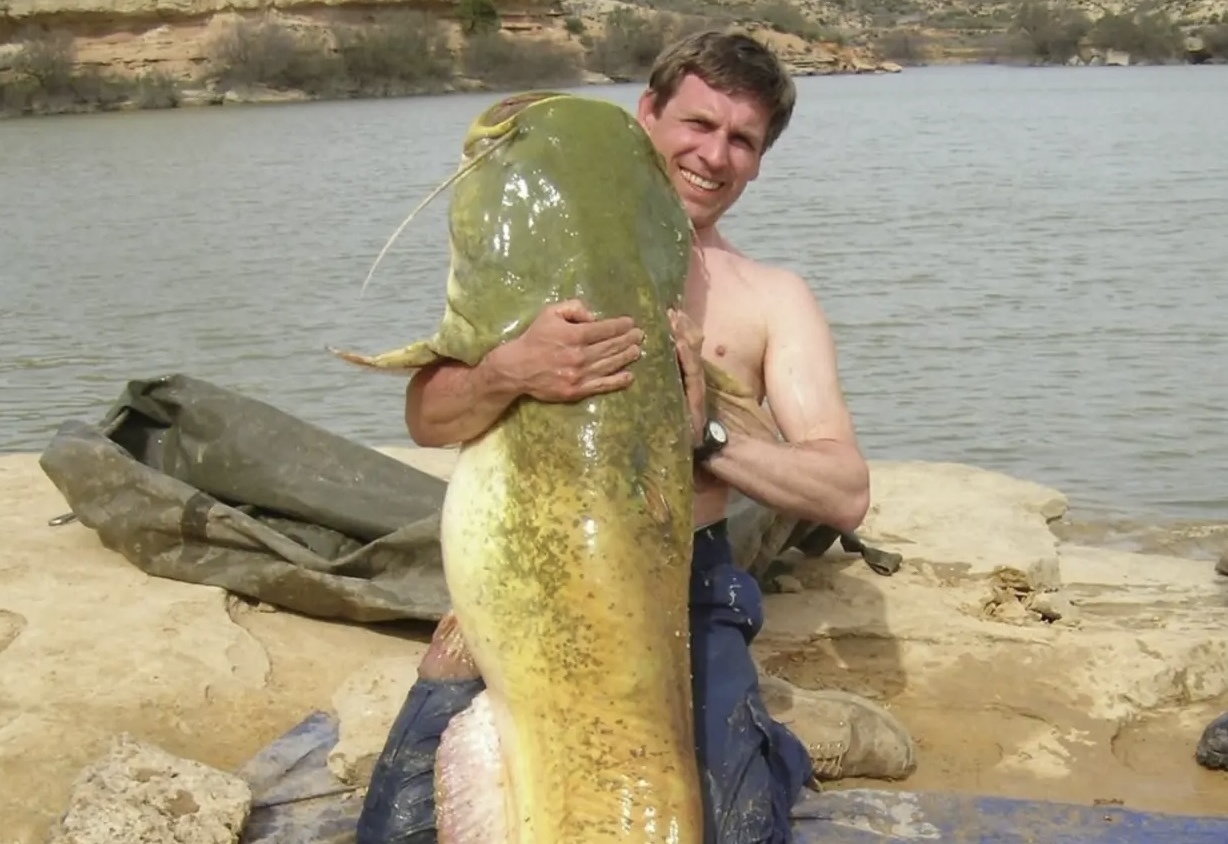
Wokingham borough council said it had recently discovered that Wels catfish – a non-native species – had been illegally introduced into one of the lakes. Two were caught by responsible anglers and immediately reported to the council’s countryside team.
One of the fish was nearly 4 ft/1.2m long and weighed 10lbs/4.5kg.
That’s small compared to what they can grow to, the council noted. These fish can reach more than 9 ft/3m long and up to 300lbs/140kg.
In some rare cases, they’ve been known to prey on birds and small mammals, which poses a serious risk to local wildlife.
It’s illegal to stock fish like this without a special licence from the Environment Agency and the Centre for Environment, Fisheries and Aquaculture Science.
The council said that Dinton Pastures would never be granted such a licence, because if these fish escaped into the river system, they could spread rapidly and cause serious ecological damage.
Wels catfish are top predators and can devastate local wildlife, including swans, geese, and native fish species.
A spokesperson for the council said: “As required by law, the captured catfish were humanely removed, in line with national guidance to protect native species.
“While this is never a decision taken lightly, it’s essential to prevent long-term harm to the park’s wildlife and ecosystem.”
The council added that releasing any fish into a lake without permission is illegal under the Salmon and Freshwater Fisheries Act. It can introduce disease, disrupt ecosystems, and cause irreversible damage.
It also thanked the anglers who did the right thing.