
























Can “home” survive the lure of the outside world – or the does the intrigue of what may be hiding beyond the horizon eventually turn what was cozy into something confining?
Such is the question explored by Flora Thompson’s semi-autobiographical trilogy of novels, adapted here for the stage by Tamsin Kennard.
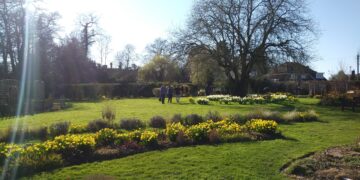
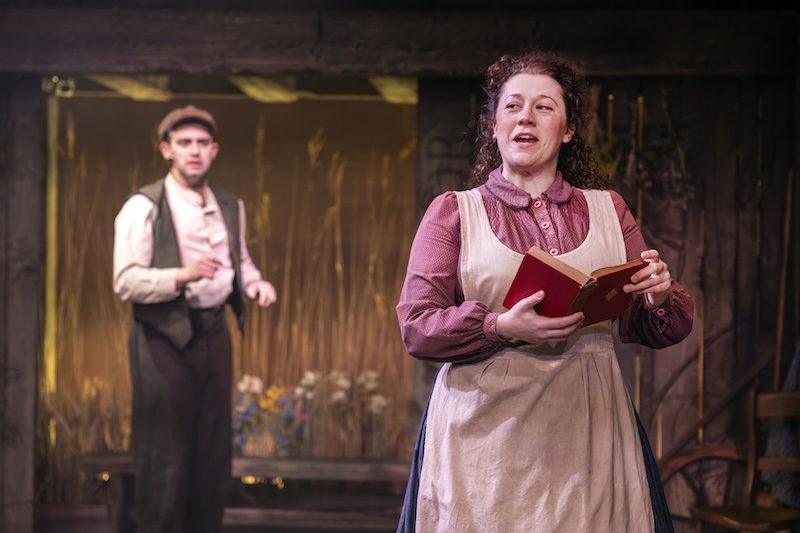
The central character of Laura (a stand-in for Thompson herself) grows up in the beautiful rural hamlet of Lark Rise. Beautiful – but not without its challenges.
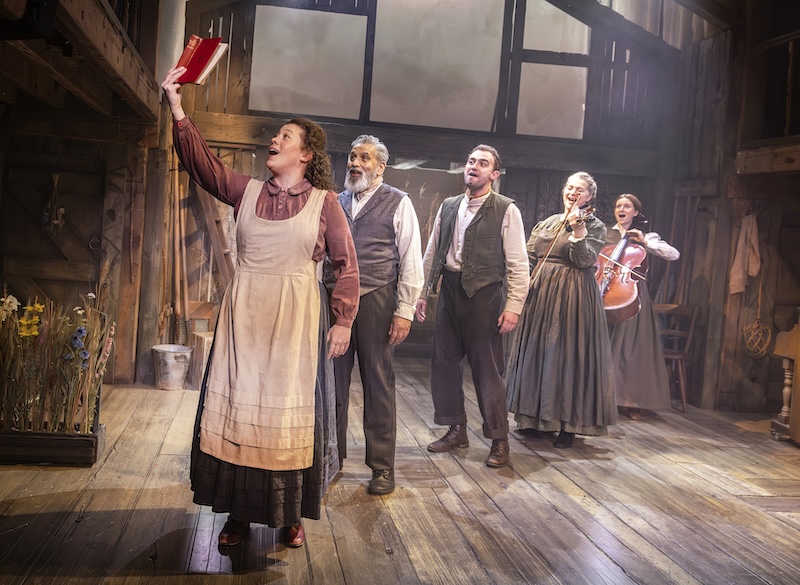
This isn’t a rural idyll, you see, but one that requires hard work in order to be survived. And that hard work doesn’t sit well with Laura’s passion for reading.
A brief holiday to the neighbouring market town of Candleford opens her eyes to the wider world, especially when she meets the local postmistress Dorcas Lane – a woman who bucks society’s expectations by doubling as a blacksmith.
Pulled between the home she’s known and loved, and a new life in which she can hope for more than being a farmer’s wife – what will Laura choose?
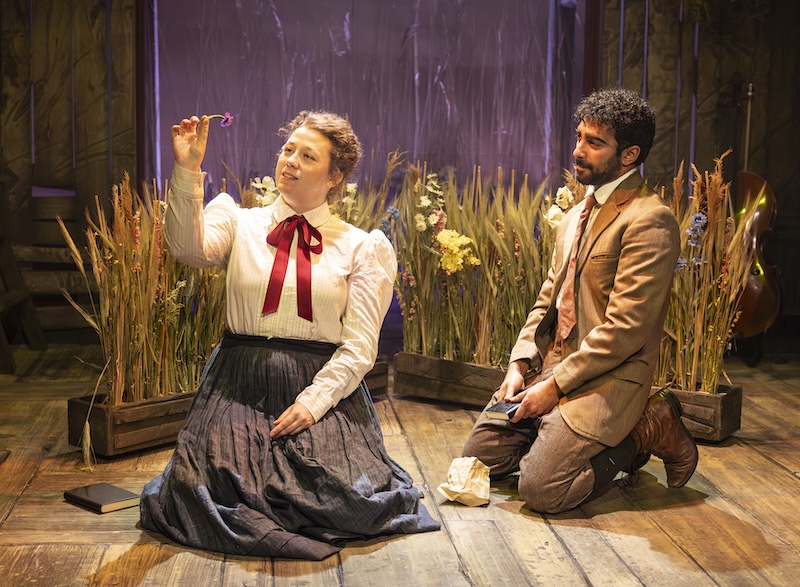
Thompson’s story recalls the themes of “Great Expectations”. The scope here is smaller – the journey not from Kent to London but from (stand ins for) Oxfordshire to Banbury – but the distance between Laura’s home and the market town is just as great in terms of social class, and the difficulty of bridging that gap is a theme which still resonates today.
This production does a great job of marking out the differences between these two worlds. Rural life in the countryside isn’t presented as a Werther’s Original advert, and is instead depicted with honesty and compassion – we have raucous folk songs in the pub, alongside the early waking and hard work required to farm the land. Contrasted with this is the more refined set of a market town – intricate and efficient, elegant rather than rough, but lacking the atmosphere and magic of the countryside.
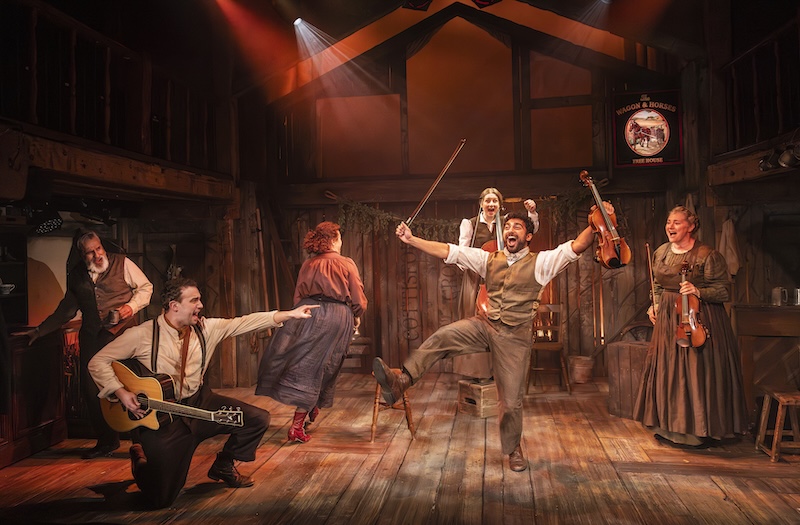
This is a refreshing and rounded perspective in an era where “rural life” is often romanticised or exists purely as the setting for a folk horror story. However it’s worth being aware that much of the rural atmosphere comes from the extensive dialogue rather than the production design. A lot of Thompson’s gorgeous descriptions of settings and events have been preserved in the characters’ dialogue, but it occasionally feels like the maxim of “show, don’t tell” has been overlooked – and given The Watermill’s history of conjuring everything from rivers to Middle Earth on a small stage, this is perhaps a missed opportunity.
I would also suggest reading the programme before watching the show. It explains that the story is essentially about Laura (and Thompson) using the medium of an autobiographical tale to revisit her past, spend more time with the ghosts of the people she’s lost along the way, and say the things she never got to tell them. If you go into the play with a full awareness of this, it makes for some incredibly moving and brilliantly acted moments. Unfortunately the play itself doesn’t make it overtly clear that this is what’s happening, which I got the impression may’ve led to confusion on the part of some audience members who hadn’t had the chance to read up in advance.
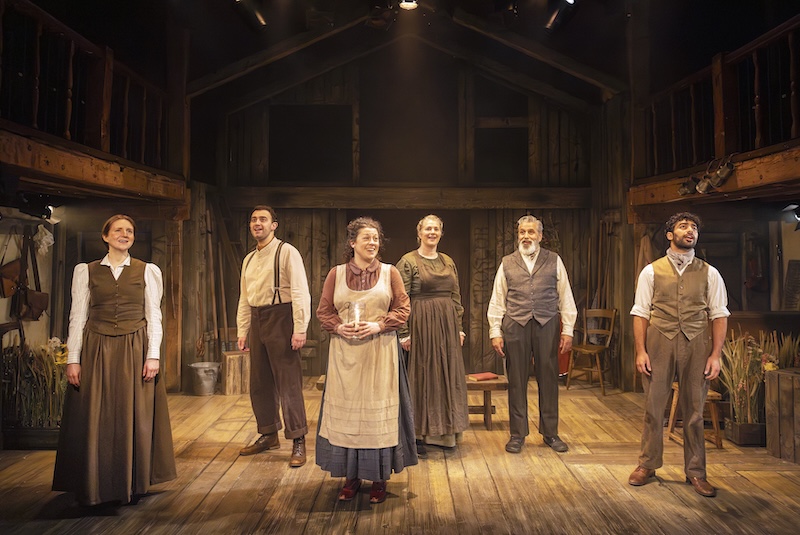
With that said, this is an interesting take on the “cosy period drama” genre with some moving and relatable themes, a likeable and engaging set of characters, and strong acting throughout.
“Lark Rise to Candleford” runs from the 6th February to the 14th March; tickets are available at https://www.watermill.org.uk. It will also run from 26th March to the 18th April at Theatre By The Lake: https://www.theatrebythelake.com/event/lark-rise-to-candleford/