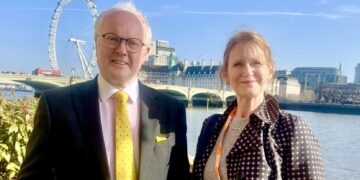



















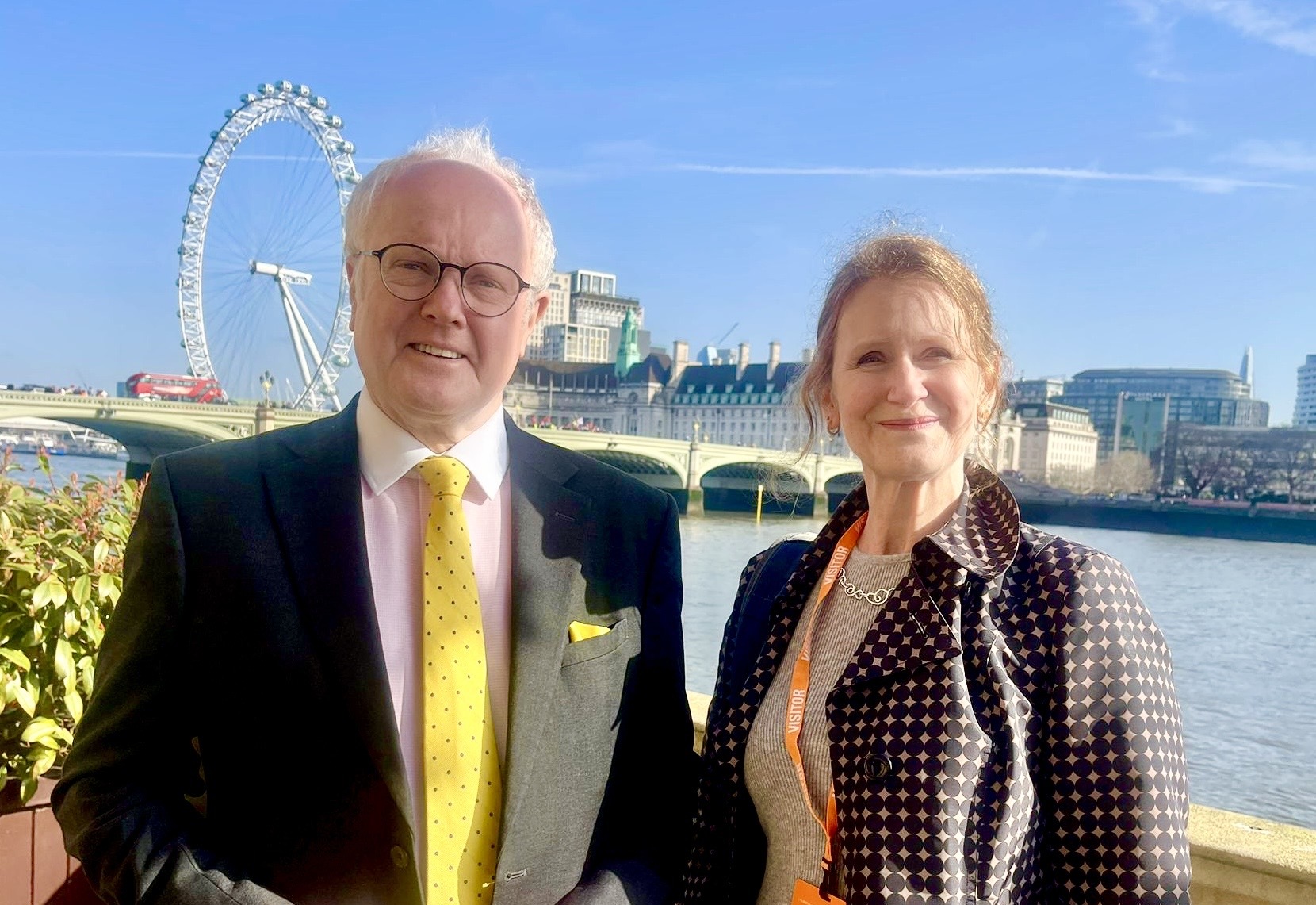
WOKINGHAM.Today’s editorial team recently visited the Palace of Westminster (the Houses of Parliament).
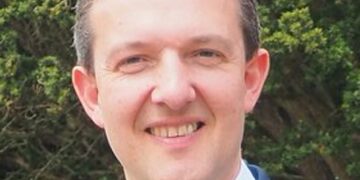
Wokingham MP Clive Jones had offered to show us round the corridors of power, and to give us a glimpse of parliamentary life.
“Sometimes I have to pinch myself to believe that I’m working here,” he said, leading us into the House of Commons.
“I love the history of this place, we really do need to preserve it,” he added.
The whole place is magical and steeped in history, but beautiful as it is, the Palace of Westminster desperately needs eye-wateringly expensive renovation, possibly costing billions of pounds.
Stepping inside the Commons, we’re struck by how much smaller and more intimate both Houses are in reality than on camera.
They’re roughly the same size and shape, but there the similarity ends.
The rule is: green and simple for the Commons; red and richly ornamented for the Lords.
The first is wood-panelled, with a plain table separating the political parties.
On the table two dispatch boxes, once used to convey urgent messages and documents, now serve as lecturns for speakers.
Modern political sparring can get heated, but at least MPs know they are unlikely to lose their heads to a swipe from the opposition.
“In times past, MPs used to arrive for meetings wearing their swords,” Clive explained.
Members still have to stay a safe sword distance from each other behind two red lines in the green carpet.
While the House of Commons is impressive, the House of Lords is jaw-droppingly beautiful.
Its gold encrusted walls, rich paintings, a gilded roof, and cathedral-coloured stained-glass windows take our breath away.
Home to red leather benches, ornate dispatch boxes, and the Monarch’s golden throne, it is the House of Commons – on steroids.
Its grandeur makes us whisper, without quite knowing why.
Leaving the Houses, we explore the Members Lobby, where statues of previous prime ministers loom above us; we see where heel spurs have worn marks into a royal staircase; and we have an unusual opportunity to visit the Chapel of St Mary Undercroft.
There, we pop our heads inside a small broom cupboard where Suffragette Emily Wilding Davison hid overnight in 1911 to record her national census address as the House of Commons, in protest against women’s inability to vote.
Clive also shows us where MPs are meant to tie their swords (should they feel the need to bring them – and if they could get them past security).
Then we see some of the living theatre of the place.
With the House preparing for Prime Minister’s Questions (PMQs), the 158th Speaker of the House Sir Lindsay Hoyle MP passes through the lobby, flanked by a frilled, silver-buckled, and mace-bearing Serjeant at Arms (the only person these days allowed to wear a sword in the building).
It is a truly fascinating place.
Returning to the 21st century, in the Jubilee Cafe, we discuss the life of an MP.
Each week Clive spends three or four days at Westminster, arriving early in the morning to secure his favourite seat – he can usually be spotted at PMQs sitting just behind Liberal Democrats leader Sir Ed Davey’s shoulder.
Voting takes place in the evenings (10pm on Mondays) so the working day is long.
An archaic process, it takes 15 minutes to count MPs as they walk through an ‘aye’ or a ‘no’ lobby.
“Voting with electronic clickers would be much quicker,” Clive said.
Working four long days doesn’t give much opportunity for any other work.
“I don’t think MPs should have another job; that was my big gripe with my predecessor John Redwood,” he explained.
“By his own admission he was working on at least two days each week for other organisations, and that’s not right.”

A huge number of people contact Clive.
“I’ve had over 65,000 emails since I was elected, asking for my opinion, or for help, the vast majority of them constituents,” he said.
“We’ve opened very nearly 10,000 pieces of casework for constituents.
“I love it when we have a success – for example, when an energy company gives someone a refund they’ve been refusing.”
But since being elected as Wokingham’s MP on July 4, 2024, Clive is most proud, so far, of having persuaded the Government to agree to a National Cancer Plan.
“There had been targets for starting treatment within 62 days, but no health authority in the country was meeting them,” he said.
“No money was put behind it and it wasn’t taken seriously, so what was the point?
“But this Government has been completely different, and when I asked for a Cancer Plan in October 2024, they said yes.”
The new National Cancer Plan Clive championed has a dedicated Department of Health team working towards its ambitions.
What is Clive’s advice to an aspiring young politician?
“It’’s a great career, but don’t come here too early,” he said.
“By all means, serve on a parish or local council, but more importantly, get some life experience – have a job outside of politics first, before becoming an MP.
“You have to be genuinely interested in the area and the people you serve.
“Wokingham’s where I live, having moved to the borough in 1974.
“In fact my first glimpse of the Palace of Westminster was as a Bulmershe School pupil on an educational visit to Parliament.”
What are Clive’s current Wokingham concerns?
“SEND education,” he said.
“It’s a big problem right across the country, and we really do need to address it, with earlier support in place for those who need it.”
Another concern is funding.
“For 16 years now Wokingham has been underfunded,” he said.
“It means that we just don’t have enough money to provide all the services we would like to; such as fixing pot-holes more quickly, resurfacing the borough’s roads, and cutting grass verges more frequently.”

What would he like to see in 10 years time?
“My wish would be to see all these things sorted in Wokingham.”
And in Parliament?
“I’d really love to bring in proportional representation – that would just be fantastic.
“It probably won’t happen in this Parliament, but I wouldn’t be surprised if it did in the next one.”