





























THE family of Lilly-May Page are no closer to receiving a conclusion over her death after a two-day inquest was adjourned last week.
Lilly-May, five, collapsed from a suspected cardiac arrest while being collected from Willow Bank Infant School, in Duffield Road, Woodley, on May 15, 2014.
The inquest, held at Reading Town Hall on Tuesday, November 29 and Wednesday, November 30, recounted the moments leading up to the youngster’s collapse shortly before 3.15pm, and the following 54 minutes as paramedics, doctors and A&E staff battled to save her life.
Lilly-May’s mother Claire Page took to the stand on Tuesday (29) to recap her witness statement to the Chief Coroner for Berkshire, Peter Bedford. She recalled her daughter’s medical history, which included a series of hospital admissions and GP appointments due to crippling stomach cramps throughout Lilly-May’s short life, as well as various respiratory and urinary infections.
Miss Page told the court: “I was made to feel like a neurotic mother, but she was always doubled up in pain.”
She confirmed details of May 15, saying that Lilly-May had gone to school as usual that morning, and was excited to see her mum and grandmother picking her up at the end of the day, at around 3.15pm.
Miss Page said: “She said to her grandma: “Look at how fast I can run”, before she sprinted away with a friend. I lost sight of her, and as I moved through the crowd I saw her lying on her back behind the school gate.
“It was like someone had placed her there. Her arms were by her side, she didn’t have a pulse and she was barely breathing. I dialled 999 but another parent had already called so I hung up.”
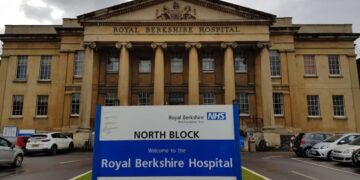
The court heard how two parents who happened to be nurses at the Royal Berkshire Hospital began performing CPR on Lilly-May until an ambulance arrived. The first crew, headed by paramedic Shannon Jacobs, who also took to the witness stand on Tuesday, arrived on the scene at 3.24pm, just eight minutes after the initial 999 call.
The court heard a step-by-step account of the procedures Ms Jacobs followed, including the decision not to take life saving equipment to the child from the ambulance, rather deciding to pick her up and carry her to the back of the ambulance. The court heard how Ms Jacobs had not asked anyone on the scene for the child’s history, and how timestamps from the vehicle’s defibrillator showed a delay on around five minutes before Lilly-May’s heart rhythm was checked, a delay which Ms Jacobs disputed.
Ms Jacobs then told the court how she read the ECG trace of Lilly-May’s rhythm to be a ‘fine ventricular fibrillation (VF)’, referring to the amplitude of the rhythm, which she deemed to be an unshockable rhythm. She recounted from her training while at Oxford Brookes University that she had learned that shocking a fine VF would increase the risk of myocardial injury, and degenerate the rhythm into asystole, which is more difficult to restore from. Instead, she continued with CPR until the air ambulance Helicopter Emergency Medical Service (HEMS) doctor, Dr Marietjie MJ Slabbert, arrived on the scene. The court heard from Dr Slabbert’s statement that she agreed with Ms Jacob’s initial diagnosis, and the pair decided that shocking Lilly-May was not the correct course of action. It was not until the youngster arrived at the Royal Berkshire Hospital, some 45-minutes after first collapsing, that it was deemed appropriate to deliver a shock, but by this time it was too late.
However, on Wednesday (30), the court heard from independent experts, including Michael Jackson, a consultant paramedic from the North West Ambulance Service who said that having looked at a print-out of the initial ECG trace, he would have delivered a shock to the youngster on the scene. Paediatric cardilogist Dr Edmund Ladusans agreed with this opinion, saying that the paramedics would have had ‘nothing to lose’ by delivering a shock to Lilly-May.
A post-mortem carried out at Great Ormond Street Hospital in London found that Lilly-May had suffered no other injury to her heart which could have caused the sudden cardiac arrest, but tests revealed an undiagnosed genetic condition known as catecholaminergic polymorphic ventricular tachycardia (CPVT) which had caused a disturbance in the electrical activity in her heart, brought on by her sudden sprint.
Dr Ladusans said: “Her heart was otherwise fully functional, and she had been receiving perfectly adequate CPR by the nurses before the paramedics arrived, so in my opinion there would have been no further risk by giving her one or two shocks at the earliest opportunity.”
When asked by the family’s solicitor David Thomas whether the outcome would have been any different if Lilly-May had been given a shock at the earliest opportunity, Dr Ladusans replied: “Yes, it is my opinion that she could have survived.”
The inquest then heard from Mark Ainsworth-Smith, a Consultant Pre-Hospital Care Practitioner at South Central Ambulance Service, who told the court that lessons had already been learned from Lilly-May’s tragic death, including an update to onboard defibrillator equipment, further training in Sudden Arrhythmia Death Syndromes, especially in paediatric patients, and contact had been made with training providers to reaffirm their position on delivering shocks in similar circumstances.
The coroner, Mr Bedford, then decided that considering the amount of emphasis being placed on Ms Jacobs’ initial training at Oxford Brookes University, he had no option but to adjourn the inquest, and seek further evidence from the training provider on what she had been taught in order for him to reach a conclusion. A date has yet to be determined.
The family did not wish to comment following the hearing.