

































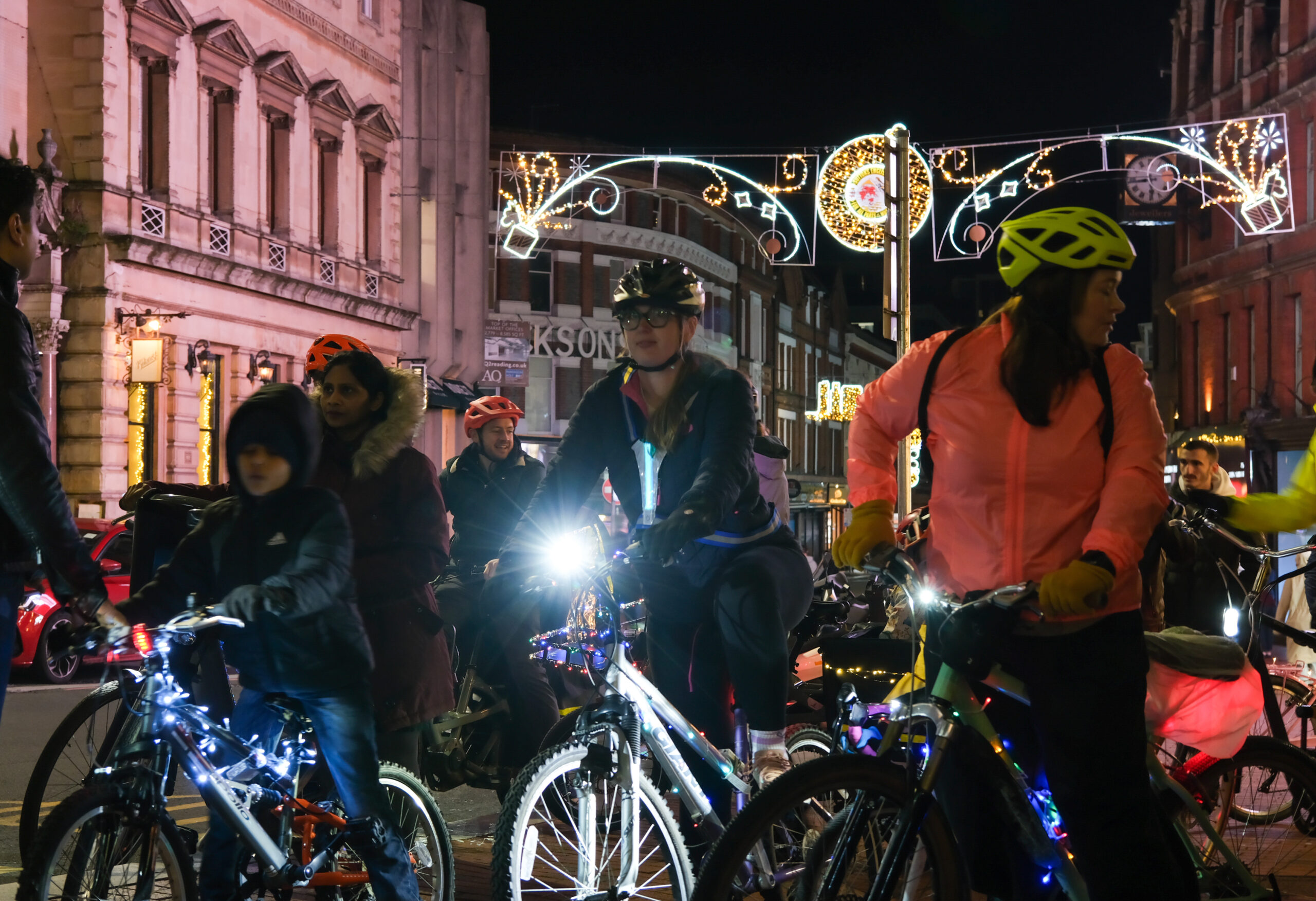
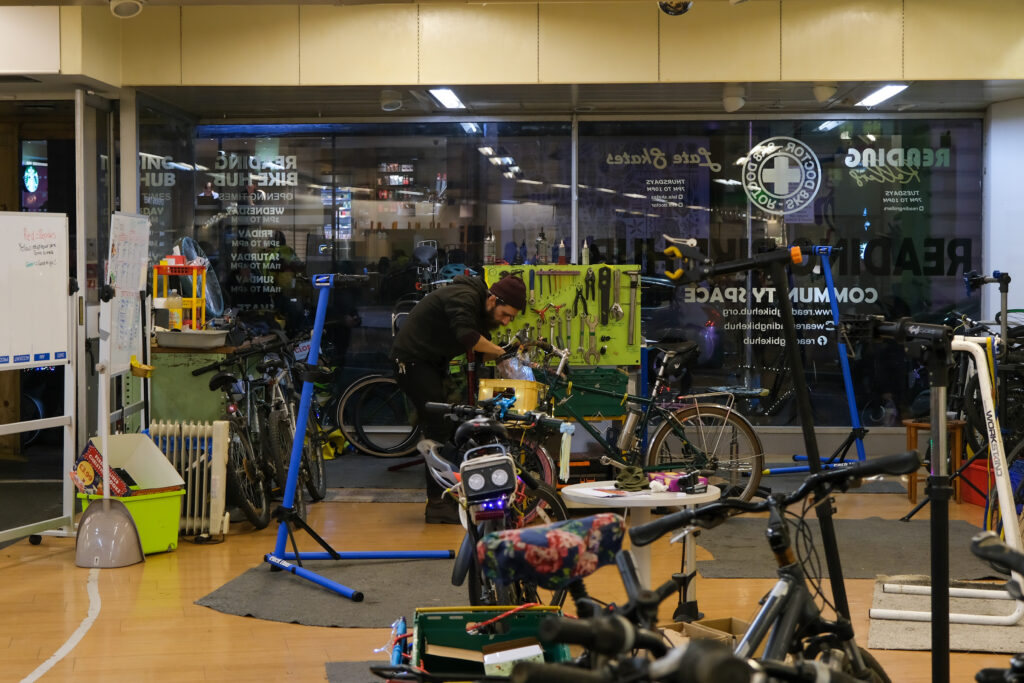
A line of bikes wrapped in fairy lights rolled out from Reading Bicycle Hub on a Saturday night.
It was the fourth “glow ride” organised in the town by Kidical Mass, aimed at raising awareness of cycling safety in winter and calling for more segregated cycle lanes.
The organiser, Kat, who also runs Reading Bicycle Hub, said the number of people who cycle drops sharply in winter – especially women.
According to Reading Borough Council, only about 6% of adults in Reading cycle at least three times a week, and the council’s long-term goal is to increase that to 15% by 2040.
There is no specific data on how far cycling numbers fall in winter in Reading. But the Transport for London’s Travel in London report notes that cycling demand “peaks in the summer and drops in the winter”, with shorter trips and fewer journeys in the colder months.
A London Cycling Campaign report, What Stops Women Cycling in London?, also found that around one in three women who currently cycle in the capital stop during winter months or after dark because they do not feel there are safe routes.
Kat believes the streets in and around Reading town centre are generally well lit, especially in the run-up to Christmas, with festive lights hanging overhead.
But away from the centre, she said, many cycle lanes lack lighting and run close to heavy traffic, making people think twice about riding once it gets dark.
For many riders, she said, the main barrier is how those streets feel, not what crime statistics say.
“It’s not that the crime rate on those routes is suddenly extremely high,” she said. “It’s that people just don’t feel safe, so they stop cycling.”
Segregated space could make a big difference, she added.
“If you have protected lanes just for cyclists and runners, people feel much safer and are more likely to keep their exercise habits going through the winter,” she said. “You can even bring your kids out without worrying so much.”
Her comments echo findings from cycling groups elsewhere.
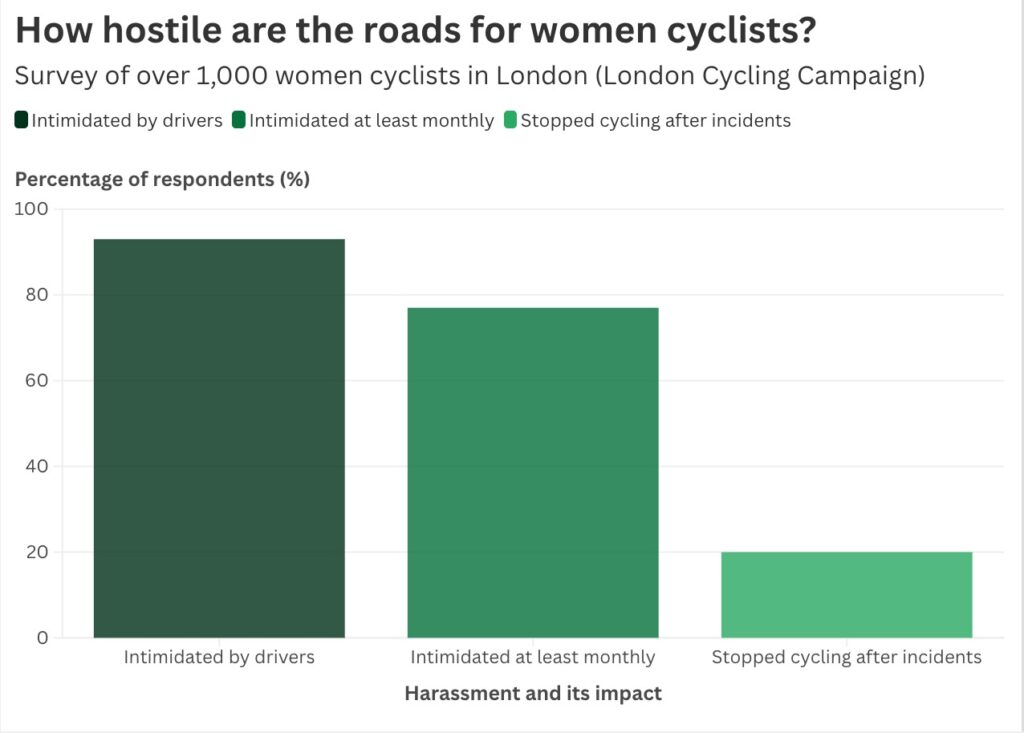
In a survey of more than 1,000 women cyclists in London, 93% said drivers had used their vehicles to intimidate them, 77% experienced intimidation at least once a month, and more than one in five had stopped cycling temporarily or permanently after an incident.
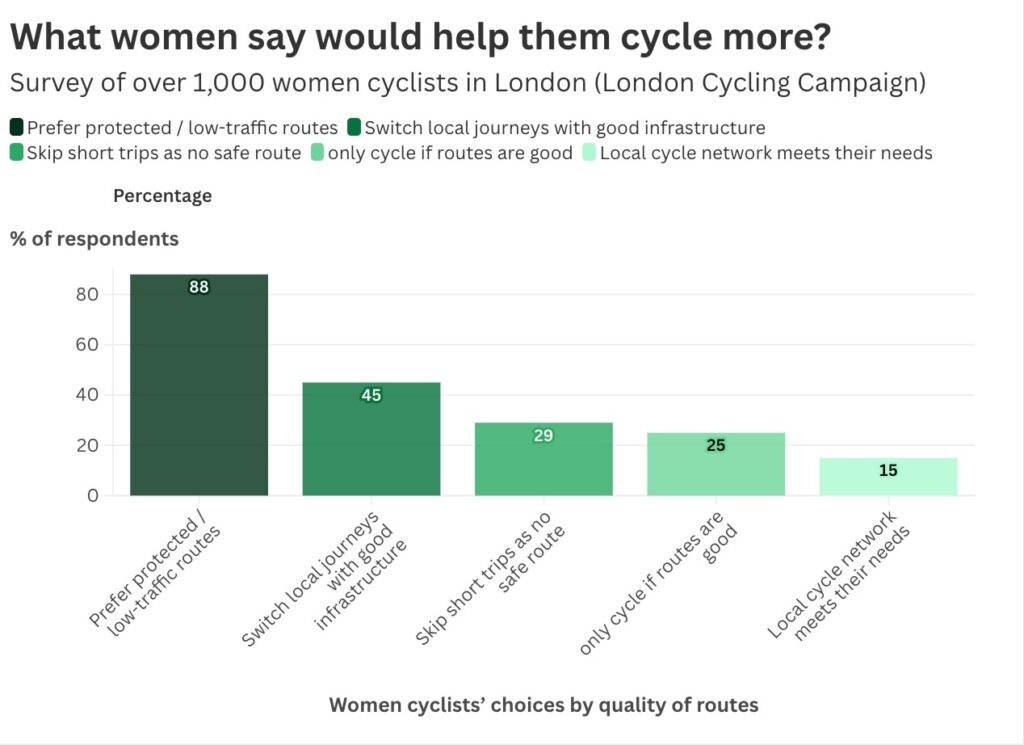
Only 15% of respondents felt their borough’s local cycle network met their needs. 88% said they prefer to ride on protected or low-traffic routes, 29% said they do not cycle short local journeys because there is no safe route, and 25% said the only reason they can cycle at all is that their current routes have good infrastructure.
“It’s sad to see people give up cycling in winter, even though it’s something we’re always encouraging people to do more of,” Kat said.
By Nathalie Chi