



























The past fortnight has seen world leaders gather in Brazil for the latest UN climate summit, COP. It’s been a contentious meeting – from controversy over rainforest destruction to the absence of a US negotiating team for the first time. But for all its flaws, COP illustrates the messy reality of trying to reach global consensus. Imperfect cooperation is still far better than no cooperation at all.
And while the headlines often focus on stalemate or political division, climate action continues regardless – nationally and locally. Even in the face of gloomy media coverage or claims that the UK’s efforts “don’t matter”, real progress is being made for environmental, economic and quality-of-life reasons.
There are, in fact, plenty of reasons for optimism. Globally, renewable electricity is now the cheapest power available. China – whose vast emissions are often used as an argument for inaction – installed more solar capacity in the first half of this year than the United States has in its entire history. Here at home, battery electric vehicles accounted for 22% of new car registrations in September 2025, and almost everyone who makes the switch says they wouldn’t return to petrol or diesel. As the saying goes, “the Stone Age didn’t end because we ran out of stones” – we invented something better. The same is happening with fossil fuels.
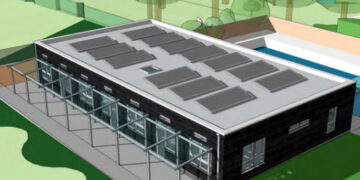
Closer to home, the council has been reviewing the business case for the Barkham Solar Farm. We expect to enter into contract for its construction by March. The predicted financial returns are lower than when last reviewed in 2022 and 2024 – but that’s because expected electricity prices have fallen. And that is good news for households and businesses while still generating a return to the council to support essential services. Once built, the solar farm will give the council protection from future price spikes and reduce our vulnerability to global shocks and volatile petrostates. Residents with rooftop solar already know the value of that stability, and the country as a whole is heading that way too.
I also draw hope from the extraordinary enthusiasm and energy of local people. Across Wokingham, residents are restoring nature, improving biodiversity, and taking practical steps to cut their own carbon emissions. I recently joined Wargrave Cricket Club for a brilliantly organised hedge-planting session – around 400 saplings planted in under an hour. Meanwhile, interest in the thermal imaging cameras available through Wokingham Borough Libraries has been so high that we’ve more than doubled the number available. They’re helping residents find where heat is escaping from their homes and make targeted, affordable improvements this winter.
Climate and nature recovery need sustained, ambitious action from international negotiators right down to individuals in their own gardens – and everything in between. I won’t pretend any of this is simple. But action is happening here in Wokingham, and through projects like Barkham Solar Farm, energy-saving support, and community-led initiatives, we are taking real steps forward, with our Climate Emergency Action Plan to keep track of how we’re moving forwards.
If you’d like advice, want to get involved, or have ideas for local action, please do get in touch at: Katrin.Harding@wokingham.gov.uk
By Cllr Katrin Harding