




































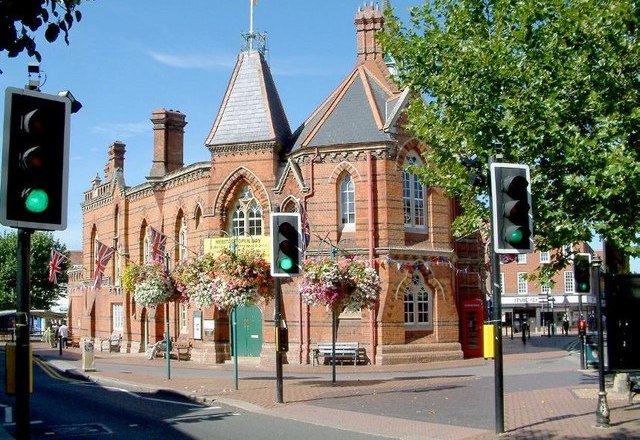
Wokingham has been ranked highly in a new study focusing on sustainable businesses.
Sustainability has moved well beyond being a box-ticking exercise, and is now a defining factor in how cities attract, support and retain successful businesses.
As pressure grows on companies to cut emissions, reduce energy use and operate more responsibly, where a business is based can make a meaningful difference.
Researchers at Ecomposite Products, specialists in sustainable composite fencing solutions, analysed 100 major areas across England to identify the most sustainable locations for running a business.
The study assessed seven indicators that reflect both environmental impact and long-term business health: the number of BREEAM-certified office buildings, greenhouse gas emissions per capita, recycling rates, business survival rates, electric vehicle charging points per 100,000 people, cycling as a commuting method, and average household energy consumption.
Each factor was weighted to calculate an overall sustainability score for every city.
BREEAM-certified buildings and greenhouse gas emissions were weighted most heavily at 20% each, followed by business survival and EV charging infrastructure at 15 percent apiece.
Recycling rates, cycling levels and household energy use accounted for the remaining 30%. Data was sourced from BREEAM, the Office for National Statistics and government datasets, offering a detailed snapshot of where green infrastructure and business stability overlap most effectively.
At the top of the ranking sits London, which achieved a total score of 78.15, comfortably ahead of every other city analysed. T
Rounding out the top five are Woking and Wokingham, with scores of 52.72 and 52.40 respectively.
Wokingham claimed first place nationally for the lowest household energy consumption, giving it a major sustainability edge despite a smaller commercial footprint.
Just outside the top five, Cheltenham, Bracknell, and Poole cluster closely together with scores hovering around 51. Cheltenham combines high business survival rates with low emissions,
Bracknell excels for recycling and low household energy use, and Poole ranks among the best cities in England for cycling to work.
Completing the top 10 are Reading and Watford, both of which score highly thanks to strong EV charging provision and a solid base of sustainable office buildings, even if business longevity and energy use remain areas for improvement.
At the other end of the table, places such as Luton, Birmingham, and Stoke-on-Trent appear among the bottom performers, highlighting how difficult it can be to balance economic intensity with environmental sustainability at scale.