


























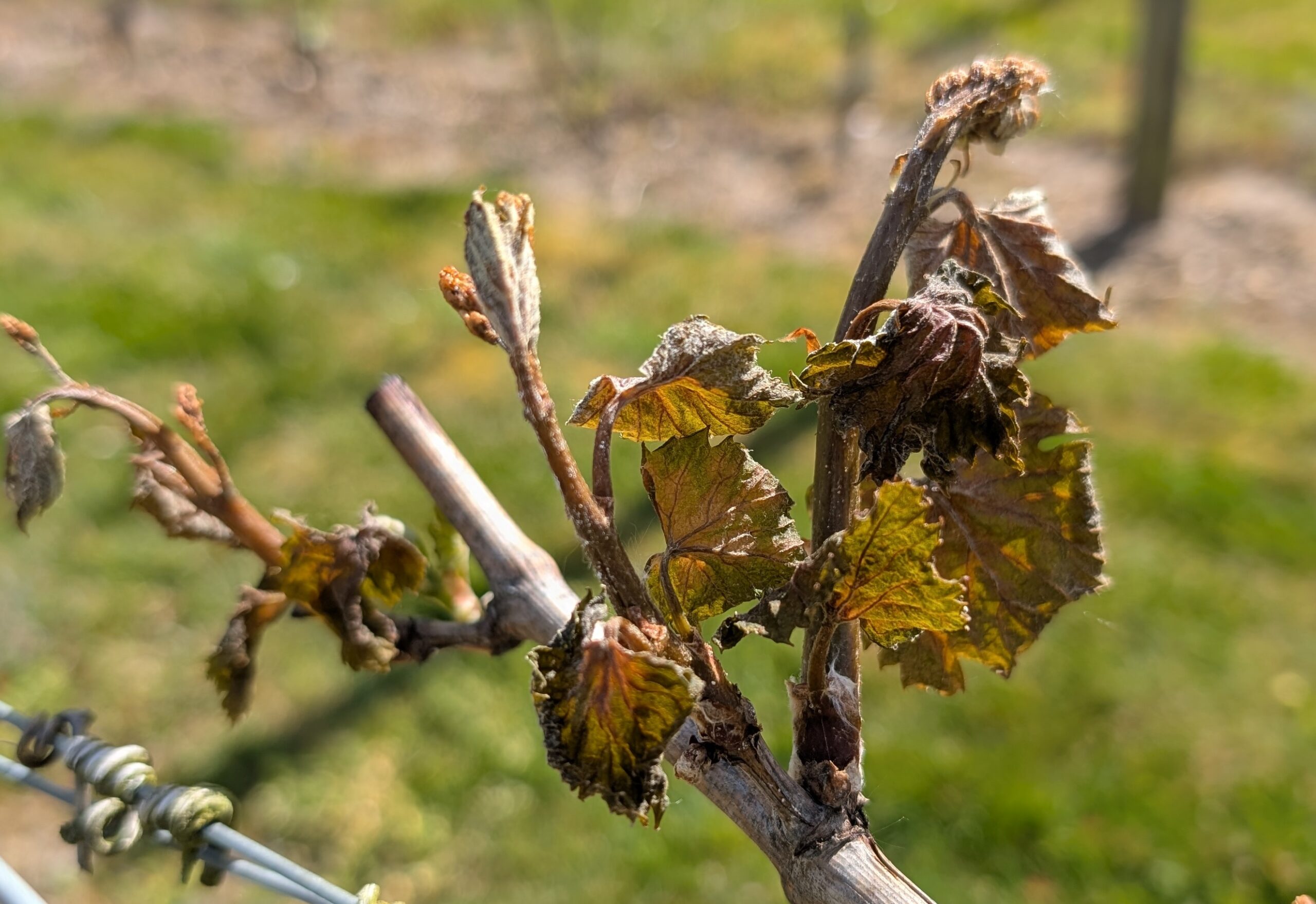
A Twyford wine estate has reported significant crop losses following an unexpected ground frost event.
The incident, on Saturday, April 25, at Stanlake Park where up to half of this year’s crop was lost, underlies both the unpredictability of English viticulture and the resilience required to produce wine in the UK.
Despite forecasts at the 40-year-old business predicting overnight temperatures of between two and three degrees centigrade, the vineyard was impacted by a ground frost, where surface temperatures fall below freezing even when air temperatures remain above zero.
The result is damage to early season shoots, which are vital to the year’s harvest.
Initial assessments indicate that between 40% and 50% percent of this year’s crop has been lost, with some areas experiencing more severe damage.
The estate’s walled garden vineyard was particularly affected, with near total losses, including young experimental plantings used to trial future grape varieties.
Natalia Pezzone,director at Stanlake Park, said: “This is a stark reminder of how fragile viticulture can be in the UK.”
On paper, it didn’t look like a risky night, but ground frost behaves differently, and by the time the damage became visible, it was already done.”
In many wine regions, growers use frost protection methods such as vineyard candles or wind machines to raise temperatures and protect buds. However, these interventions come at a significant financial and environmental cost.
At Stanlake Park, the decision has been made not to rely on such measures, both to avoid introducing substantial additional costs and because of a long standing commitment to sustainability.
Sustainability has been a key focus for the estate in recent years. Initiatives include removing foil neck coverings from bottles, adopting a single wraparound label to reduce material use, and reusing packaging wherever possible.
Some of the cardboard boxes used on site have been in circulation for over a decade, reflecting a practical, long term approach to reducing waste.
While vines will produce secondary shoots following frost damage, these typically carry fewer grapes, meaning overall yields will be significantly reduced. However, lower yields can sometimes lead to greater concentration and quality in the remaining fruit.
“There is always a sense of resilience in winemaking,” Pezzone added.
“You take stock of what remains and keep going. A smaller crop does not necessarily mean a poorer vintage.
“In some cases, quite the opposite. We experienced the same sort of loss six years ago, and the grapes we had left ended up terrific.”
“During years with a successful yield, we store wine in tanks to use for future blending. This approach is rooted in our commitment to sustainability.
“While many vineyards use candles or wind machines to combat frost, we choose not to for two primary reasons: first, the high financial costs would inevitably increase the price for our customers, something we’re not willing to do; and second, these methods do not align with our environmental and sustainability policies.
“While we monitor temperatures and employ sustainable protective measures, this specific ground frost was unexpected.
“We accept these risks to maintain our ecological standards — making hay while the sun shines on better years to ensure we can survive such events like this.
“We are particularly saddened to have lost all of our experimental young vines used for testing new varieties.”
Stanlake Park continues to welcome visitors throughout the season, with more than 10,000 guests attending wine tours, tastings, and events each year.
The estate also hosts private hire events and vineyard weddings, and offers luxury on site accommodation for those looking to stay among the vines.