
































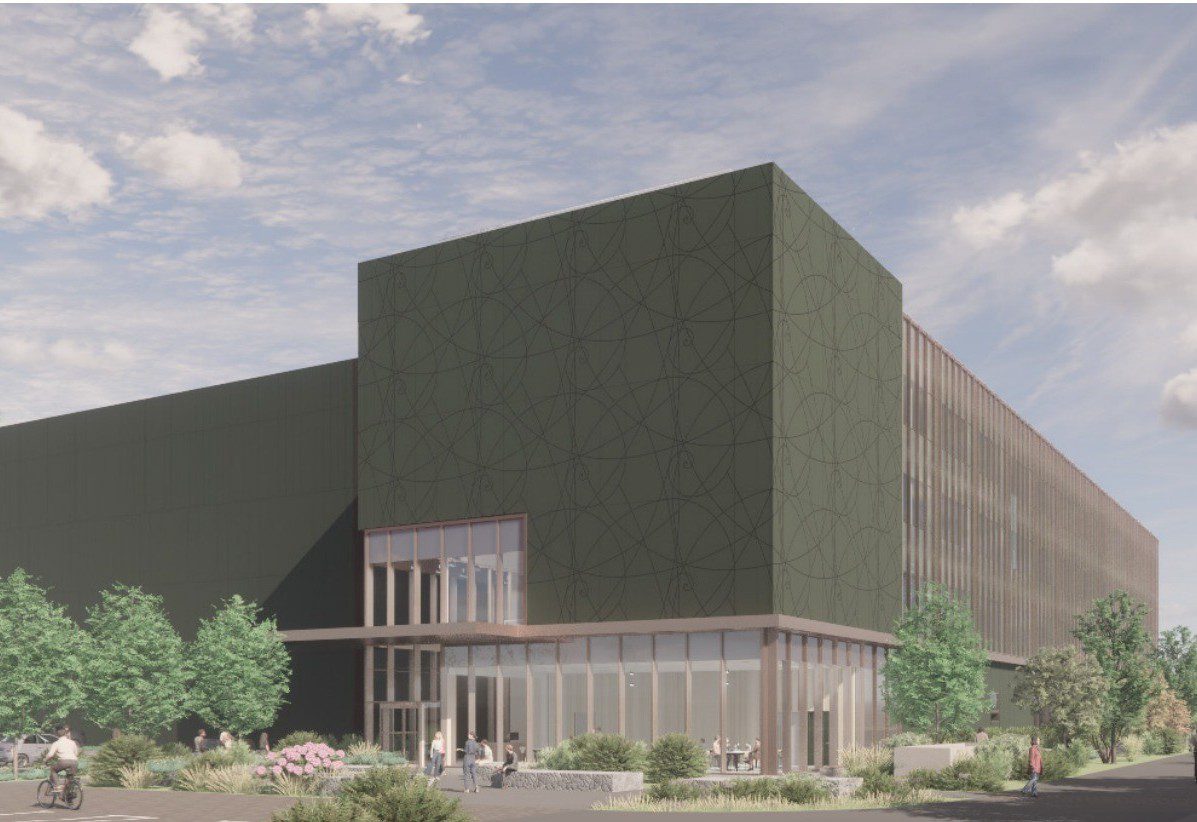
Materials stretching the length of more than 211 diplodocuses will be housed in a new Natural History Museum proposed for Shinfield, designers claim.
But some neighbours fear for its impact on the wildlife of today.
Proposals for the new storage facility at Thames Valley Science Park have been submitted to Wokingham Borough Council for planning permission.
The Natural History Museum said it needs the new building to house around one third of its collection, as well as “cutting edge laboratories” for its scientists.
Designs sent to the council said the move would “entail the largest ever move of natural history specimens globally – 28 million specimens in total – equivalent to one third of the museum’s collection.”
It added: “In addition, 5,500 metres of library material will also be moved – equivalent to the length of more than 211 Diplodocuses.”
In objections submitted to the council, some nearby residents have raised fears about the impact the large new building would have on the surrounding countryside.
The building will take up space “equivalent to three football pitches” and be four storeys high. It will also be flanked by the wooded New Covert and the ancient woodland of St John’s Copse.
Stephen Kitt of Sea Buckthorn said: “There is already far too much building in the area. I am suffering with breathing issues due to all the added building pollution, not to mention damage to the natural environment.
“The over-development already being carried out is not sustainable, and is destroying the last remaining green natural area in Shinfield.”
And Jonathan Sellars of Fairmead Road added: “This is yet further inappropriate development in Shinfield. As with the studios , this huge building will give zero benefits to anyone leaving locally.
“Shinfield and the surrounding suburbs are going the same way as many boroughs in west London. Once village areas blighted and forgotten at the expense of industrial scale development.
“This area used to be one of the most diverse for habitat and wildlife, and is rapidly being paved over.”
Designs submitted to the council acknowledge the Loddon River Valley “has a strong rural character and a sense of remoteness in some areas.”
They said the landscape design is “sustainable” and includes “buffer zones” to protect habitats, such as the two neighbouring woods. Plans also describe “species-rich” grasslands and meadows to the north and south.
Some residents have also written in to support the plans.
Jane Mason of Rosecroft Way said she supported the plans, but that road signage should be improved in the area.
Peter Leisupe of Mildenhall Close added the facility should only be approved if it includes a public museum “so that we, the locals, can benefit.”
Consultation on the plans remains open until December 30.
It is unclear whether council planning officers accept dinosaurs as a unit of measurement.