



















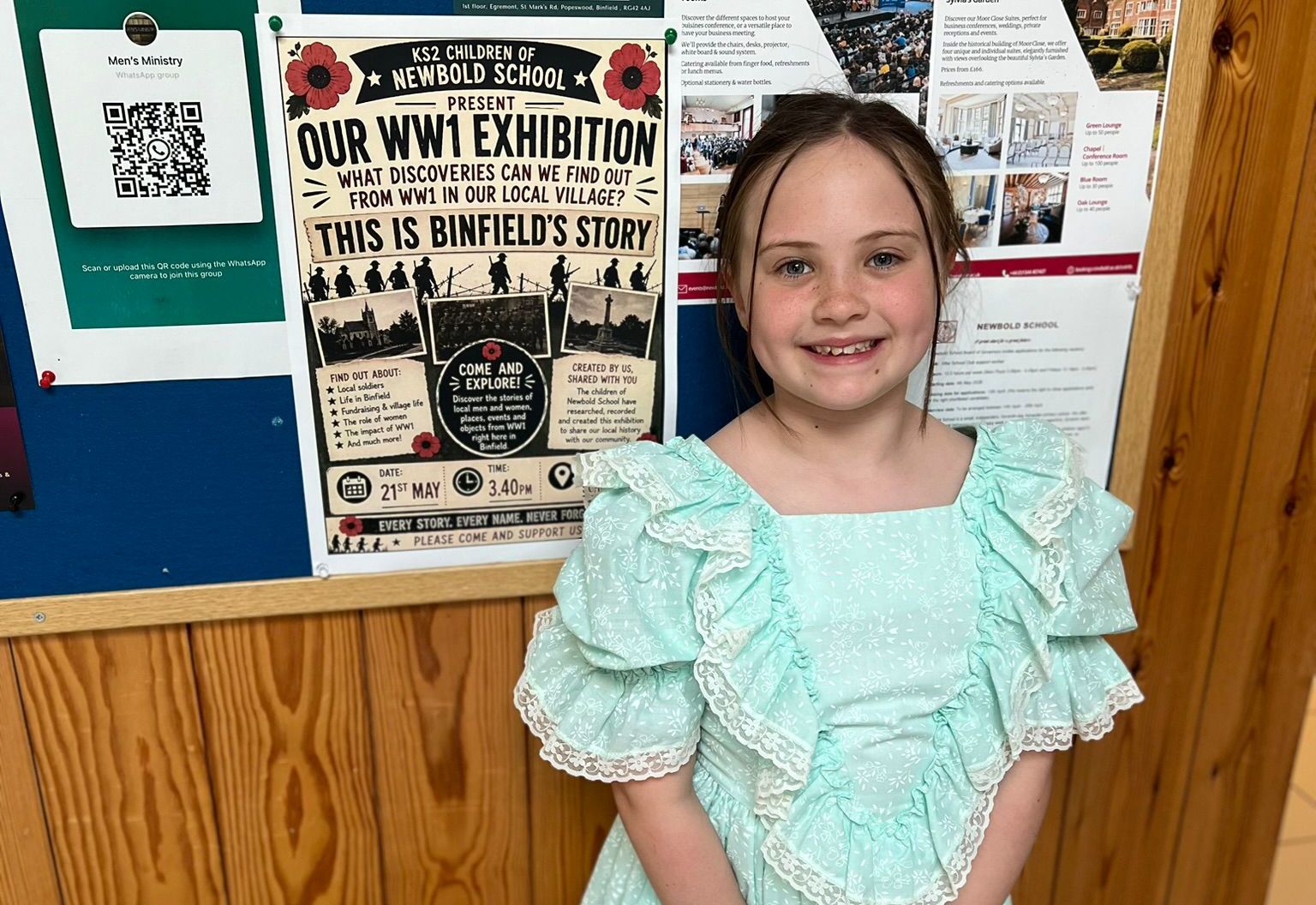
PUPILS at a Bracknell school are preparing to share the hidden stories of Binfield’s First World War past with the community.
Newbold School’s special exhibition has been created as part of the Malcolm Doolin Award (which celebrates young historians and honours Malcolm Doolin’s legacy by encouraging excellence in local history research).
It can be seen today, Thursday May 21.
Newbold’s Key Stage 2 classes (years 3 to 6) have spent months researching local soldiers, village life during the war, the role of women and the impact of WW1 on Binfield.
Their work is shared in a public exhibition, This Is Binfield’s Story.
Teacher Maria Gogarty said the Malcolm Doolin Award gave pupils the opportunity to become ‘young historians’ and take ownership of their learning.
“Rather than simply being told facts, they were able to investigate, question and uncover stories for themselves,” she said.
“It has been incredibly rewarding watching them become so passionate about the history of their own community and develop a deeper appreciation of the people who shaped it.”
The pupils first became interested in local history while studying Binfield as part of their geography work.
Fascinated by the village’s Grade II listed buildings during a fieldwork trip, they began asking questions about the people who once lived there and how the village changed during wartime.
“It helped the children connect the past with the present and understand that history is not just something in books, but something woven into the place where they live,” said Mrs Gogarty.
The project officially began on Remembrance Day 2025 with a visit to the WW1 memorial at St Mark’s Church, opposite the school.
After observing the two-minute silence, pupils began researching the names of soldiers listed on the memorial and uncovering their links to the village.
Support from local historian and author Andrew Radgick helped bring the stories to life, while the children also discovered that an auxiliary hospital once stood on the same road as their school.
“This was a huge moment for the children because it helped them realise how closely connected their village was to the war effort,” Mrs Gogarty said.
“They were fascinated to learn that wounded soldiers would have been treated only a short distance from where they now learn every day.”
The pupils explored life on the home front as well as the battlefield, learning about fundraising efforts, nurses, volunteers and how women took on jobs such as farming during the war.
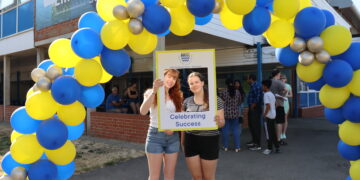
Year 3 pupil Autumn Turner said her favourite part of the project was ‘using the computers to do research and create our own posters to advertise our event’.
She said one of the most interesting discoveries was learning that her own great-great-grandfather had been involved in the war.
Another unexpected discovery came from a WW1 pocket Bible purchased by Mrs Gogarty, which contained a handwritten blessing signed by Agnes Weston.
The find sparked further research into support networks for servicemen during the war.
“Each new discovery seemed to lead to another, and the children became increasingly excited as they realised they were uncovering genuine local history,” Mrs Gogarty said.
But perhaps the project’s most powerful lesson has been its message for the future.
“We need to learn our past and what people did then, and learn from it so we can have better futures and no more wars,” Autumn said.
“It’s sad people die.”
The exhibition can be seen in Newbold School Hall, Binfield, today, Thursday May 21, at 3.40pm.
For information, visit: newboldschool.info and westernfrontassociation.com