


































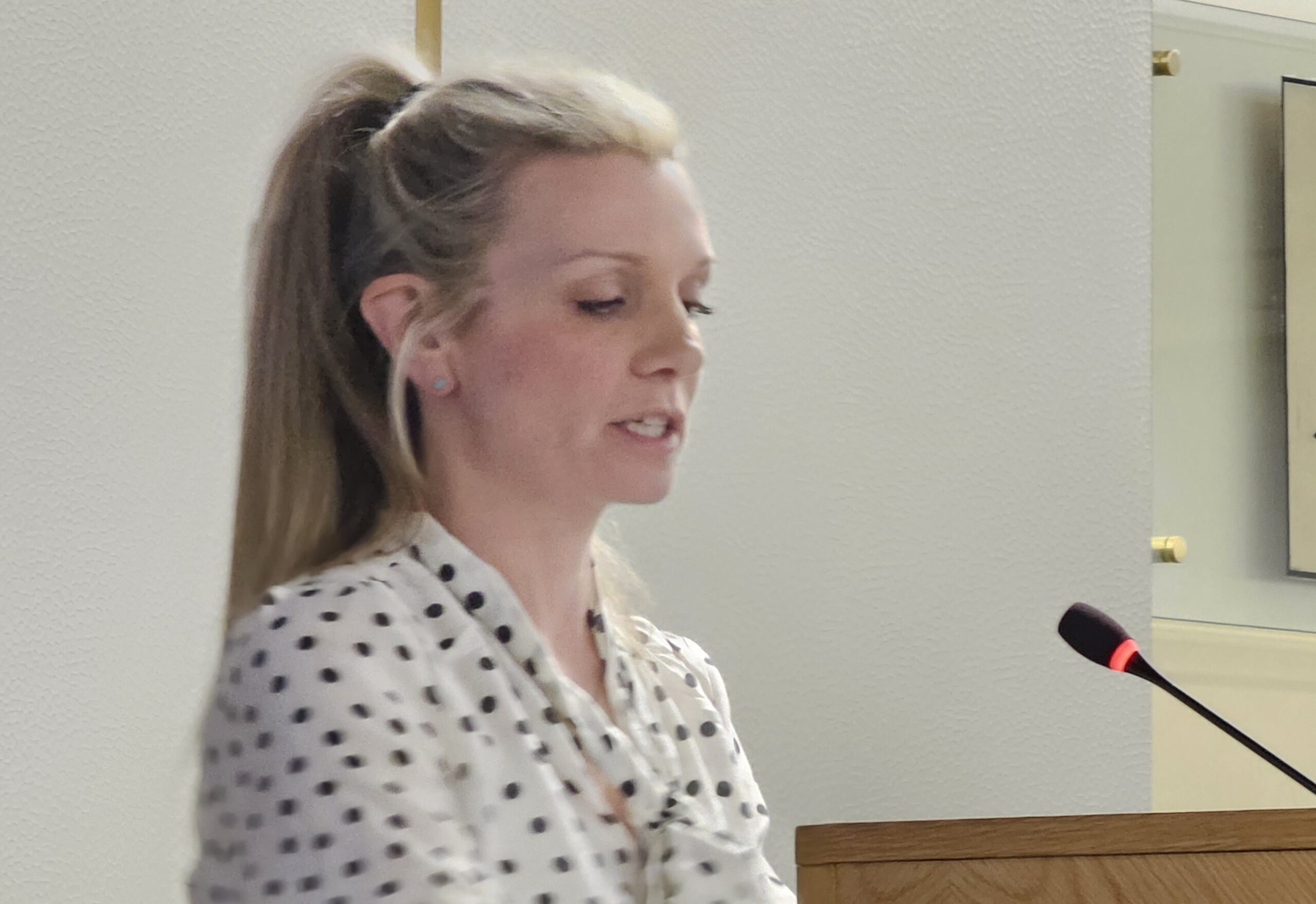
Bracknell has revealed its new strategy for protecting women in an impassioned intervention by the council leader.
Cllr Helen Purnell has made it her personal mission as leader of Bracknell Forest Council to protect women and girls in every part of the borough.
Answering a question at a meeting of the Crowthorne Village Action Group, she said that when she took over as leader she was determined that “something positive” must come out of the situation she inherited.
She vowed that tackling violence against women and girls would be at the heart of that change.
Cllr Purnell branded such violence “an absolute scourge on our society” and set out a domestic abuse and safety strategy that will roll out over the summer.
She said: “I want women and girls to feel safe in this borough and for men that abuse women physically, mentally or emotionally to know that we will no longer stand for it. You are being watched and will be reported.
“We have so many amazing men in the borough who are excellent role models for young boys. They will be celebrated so young boys have a positive alternative to the negative voices online.”
At the centre of this work is a new Women’s Safety Charter for Bracknell Forest, to be implemented borough‑wide and based on London’s Women’s Night Safety Charter.
Every gym, school and college in Bracknell Forest could be urged to sign – but the council wants to go much further.
Through licensing and other relationships, the council can hope for strong support from local organisations and businesses.
Pubs, bars, restaurants, late‑night venues, taxi and private‑hire firms, bus operators, railway stations, supermarkets, shopping centres, business parks, community centres, faith venues and major local employers could all, in theory be convinced to put their name to the charter.
Cllr Purnell can also lean on the council’s formal partnerships, pressing Bracknell Forest Council itself, Thames Valley Police, Royal Berkshire Fire and Rescue Service, NHS providers and town and parish councils to become signatories and embed the charter’s standards in their day‑to‑day work.
The charter is not just a slogan. It is built around seven specific commitments that turn concern for women’s safety into concrete action.
Every signatory will be asked to appoint a women’s safety champion to drive the work internally, and to run visible communications in buildings and online making clear that women’s safety is taken seriously and explaining how to get help.
Clear reporting routes will be set out for both staff and the public, so people know exactly how to raise concerns or report harassment and abuse, and can be confident they will be believed.
Staff will receive training on how to respond to reports, how to record incidents properly and how to share information so that issues are acted on rather than ignored.
Organisations will also be encouraged to review and redesign their spaces – for example lighting, layout and management – to make them safer, especially at night.
Alongside the charter, Bracknell could set up active bystander training so workers and residents know how to step in safely if a woman feels threatened, and prevention work such as supporting schools to become smartphone‑free, limiting teenagers’ exposure to misogynistic online content.