






























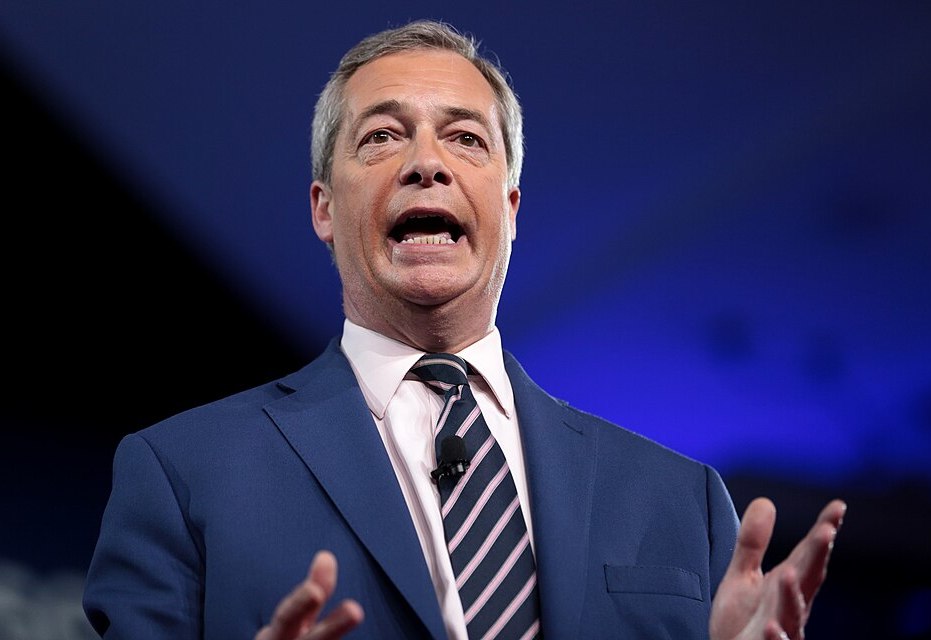
Nigel Farage is seeking to “clear his name” and wrest back control of events by resigning as an MP and triggering a by-election, political experts at the University of Reading have said.
University of Reading Professor in Comparative Politics has said Reform UK leader Nigel Farage has resigned as an MP for Clacton, triggering a by-election in which he will stand.
Dr Miriam Sorace, Associate Professor in Comparative Politics at the University of Reading, said: “Nigel Farage’s resignation looks like an attempt to use an election to clear his name.
“If Farage wins a new vote, he can, and probably will argue, that voters have settled the matter, and that any further questions are just the establishment refusing to accept the result.
“This is a classic populist tactic. Farage appears to be trying to draw attention away from questionable political donations and unclear political influence, in an effort to shore up his anti-establishment image.”
“For Labour, the opportunity is to make the Clacton contest about honesty and integrity, and to present Reform not as a movement against the elite, but as a front for elite financial interests. The outcome will depend on which story wins out, whether it’s ‘Farage versus the establishment’, or ‘Farage and the old politics of money’.”
Dr Lawrence McKay, lecturer in Comparative Politics at the University of Reading, said: “Farage’s resignation is a bold gambit. The political logic is understandable as it stops the Parliamentary investigation into his affairs dead in its tracks, at least for the duration of the by-election.
“While media stories will not let up, the situation comes back into his control, as he is no longer at risk of the damaging signals sent by official investigations, or of a recall petition being triggered that would force a by-election with Farage in a weaker position. The campaign would force an increasingly divided party to publicly rally behind his leadership, and a by-election win would allow him to re-assert authority over Reform UK.
“On the other hand, the decision holds profound political risks. Under normal circumstances, Farage would be favoured for an easy win in Clacton, a place which became a byword for ‘Brexitland’ and where he holds a majority of over 8,000 votes.
“However, these are far from normal circumstances. For a segment of Reform voters, more attracted by Farage’s man-of-the-people image than ideology, the scandal could have dented his appeal. Furthermore, despite their success in the polls, Reform have recently faced some high-profile setbacks in the Gorton and Denton and Makerfield by-elections.
“What is different in this case is that the most viable party to defeat Reform is not Labour, the Greens or the Lib Dems, but the Conservatives. They came a clear second place in 2024, held the seat earlier in the 2010s, and won all but two post-war elections in the predecessor constituency, Harwich.
“Any Conservative victory would be built on ‘Stop Farage’ tactical voting from the roughly 25% of voters who opted last time for Labour, the Lib Dems, and Greens. However, we don’t yet know if the Conservatives are a palatable option for these voters. A more centrist Conservative candidate could make the difference, though that may not be the party’s own preference.
“The contest might also prove an enticing prospect for an outsider, anti-corruption candidate, or for Restore Britain, which has made its own power base further up the coast in Great Yarmouth.”