





























![Reading Festival has laid out its Look Out For The Planet pledge ahead of its return next week, bringing measures set to promote sustainability. Picture: Luke Dyson [LukeDyson.com]](https://wokingham.today/wp-content/uploads/2026/08/Img1871502-360x180.jpg)




Wokingham Borough Council’s new local plan has almost completed its examination by government planning inspectors. It was drawn up to accommodate the old requirement from government of 748 dwellings per year, rather than the new requirement for more than 1,300 a year.
The plan, once adopted, will allow us to control development at the old number, protecting us from inappropriate speculative development outside the plan for about three years – the time ministers are giving us to draw up and secure approval for a replacement plan that provides for upwards of 1,300 new dwellings a year.
The challenge is truly daunting. Three years is far less time than local plans have previously taken to be devised, consulted upon, and tested by inspectors. And the new housing target vastly exceeds anything we have had to accommodate before.
Two ambitions appear to explain ministers’ insistence on increased numbers: a desire to stimulate growth in the economy to increase the tax take and address the public finance crisis; and a desire to make housing more affordable for those denied access to a home of their own.
These are noble ambitions, but they are unlikely to be delivered by higher housing targets in areas like ours.
In terms of growth, the constraints on delivery of market housing in Wokingham Borough are very real in terms of the availability of land and the capacity of service infrastructure. Even the construction industry wonders how it can access the labour and materials needed for such a massive house building programme.
The second objective – increasing the affordability of market housing – is even less likely to be achieved in our area.
Recent experience in our borough tells us that building more market homes causes prices to rise not fall. Our proximity to London means that migration from the capital sustains ever higher prices, while local need often remains unmet. Movement out of London is not new, but it has increased greatly since the pandemic and the arrival of new methods of working from home.
A more general clog on delivery on the scale and at the pace that the government wants is the operation of the housing market. Around a million new homes across the country have planning permission but have not been built because developers have no interest in seeing prices fall.
While no one can deny the need for new market housing to meet future needs, granting more permissions for market housing will not address the problem of affordability while developers are able to manage prices to their advantage.
A more realistic way of making housing more affordable is by building more homes that are sold or rented at sub-market rates, and particularly council houses. There are some encouraging signs that ministers, despite their seeming faith in the capacity of the market to deliver cheaper housing, recognize that publicly subsidized or even publicly built housing is the best way to meet their affordability ambitions.
We in Wokingham will be seeking to ensure we contribute our share to delivering this kind of genuinely affordable housing for those who are priced out of the housing market.
But we will continue to make the case that the government’s attempt to cram unsustainable levels of market housing in the Southeast, and Wokingham in particular, risks irreparably damaging the character of our area without successfully delivering the government’s own growth and affordability ambitions.
If ministers want to be truly bold, they should develop a national housing strategy that encourages market housing to be built where it is most needed. Better that than defaulting – as governments have done for many decades – to the unsustainable approach of expecting ever greater numbers to be delivered in the already-overstretched Southeast.
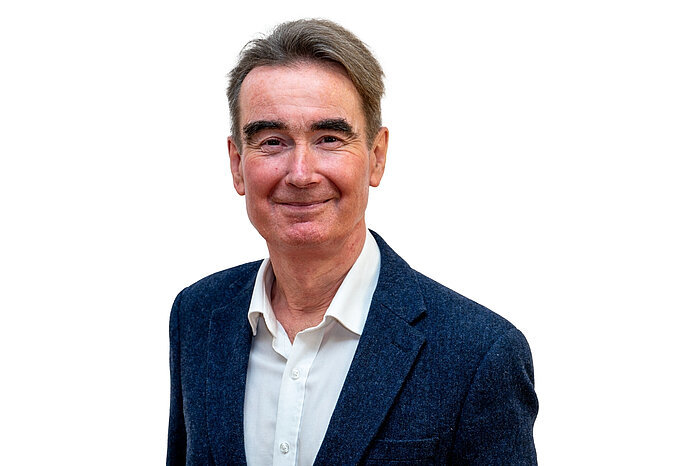
By Cllr Stephen Conway