




















![Reading Festival has laid out its Look Out For The Planet pledge ahead of its return next week, bringing measures set to promote sustainability. Picture: Luke Dyson [LukeDyson.com]](https://wokingham.today/wp-content/uploads/2026/08/Img1871502-360x180.jpg)




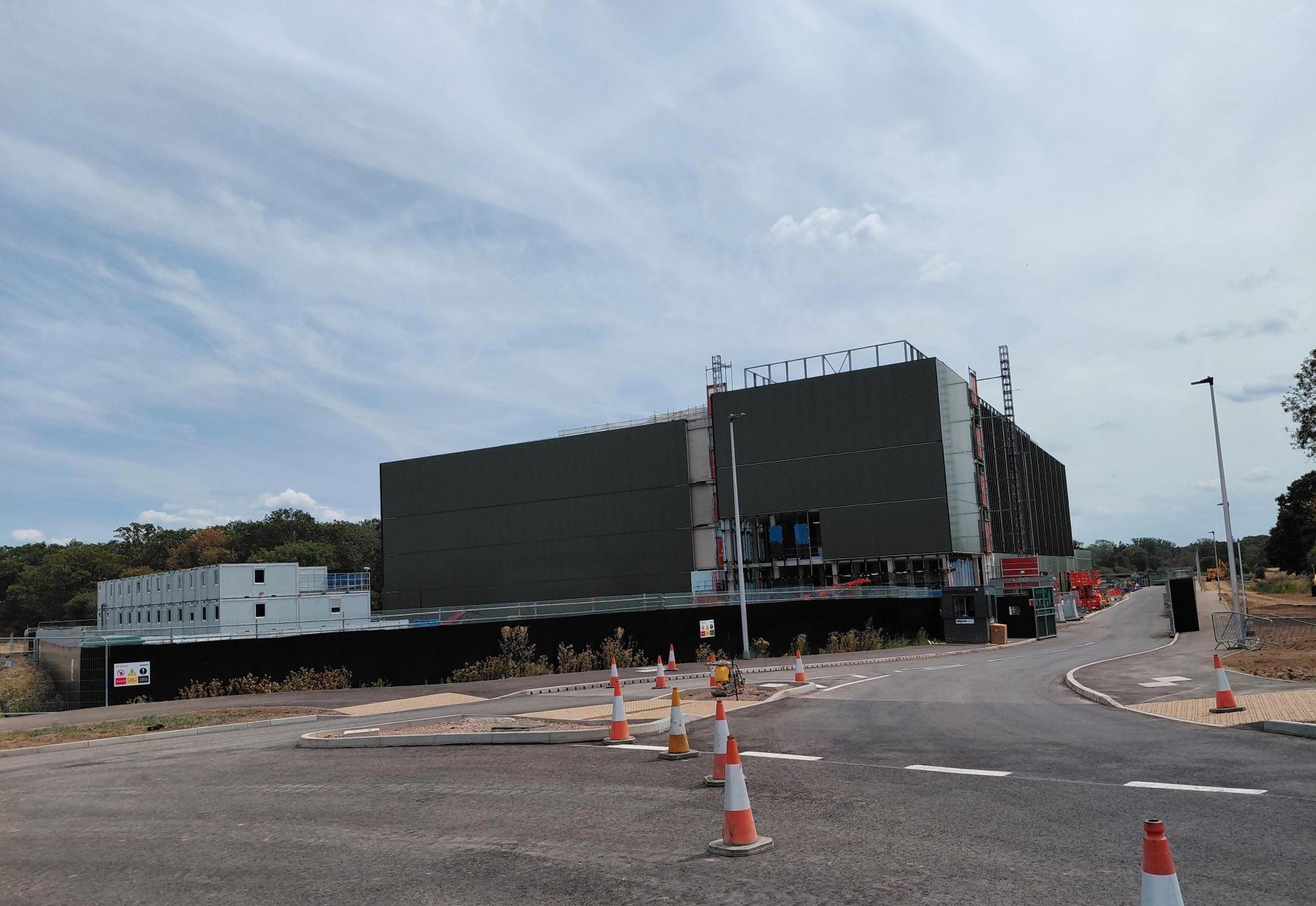
The huge facility that is being built near the M4 is moving closer to fruition as one phase of the project is nearly complete.
Drivers approaching the M4 Junction 11 heading westbound may have noticed a massive building that is under construction in clear view of the motorway, especially at night.
Once it is finished, this building will be the ‘Natural History Museum Unlocked’, a £201 million project to create a facility for science and research, and to assist in the digitisation of the museum’s collection.
It is being undertaken in a partnership between the museum, the government and the University of Reading, which owns the Thames Valley Science Park site that the facility is being built on.
Work on a crucial phase of the project is nearing completion.
As the Natural History Museum Unlocked is effectively being built on a field, an access road has been required both for construction and for future users.
Construction has been undertaken by Fergal Contracting, civil engineering specialists.
Work on the access road is almost complete.
Once the road is finished, Fergal Contracting crews will hand the site entirely over to Mace Construction, which is in charge of building the facility itself.
Photos from the site show that much of the exterior has been built, but there is still a gap where the interior of the building can be seen.
According to the website Construction Map, which details projects that are being undertaken by firms registered by the Considerate Constructors Scheme, the building work will be completed on May 31, 2027.
The website entry on the access road has been removed following the end of the initial contract term this month.
It is understood that the contract with Fergal has been extended while work continues.
When staff at Mace Construction have done their work, Collections, equipment and people start to move into the centre from 2028 in a years-long process, with the facility being fully operational in 2031.
At that time, it will house more than 28 million specimens ranging from a whale’s skull and the skeleton of a giraffe to tiny strands of DNA.
Permission for the project was granted by Wokingham Borough Council, the planning authority, in March 2024.
A ground-breaking event took place in September last year.
At the time, Professor Robert van de Noort, vice-chancellor of the University of Reading, said: “This collaboration with the Natural History Museum perfectly aligns with our commitment to world-leading environmental research and innovation.
“By developing this state-of-the-art facility at Thames Valley Science Park, we’re creating unprecedented opportunities for collaborative research that will help address the planet’s most pressing challenges. We’re excited to see this transformative project moving forward.”