














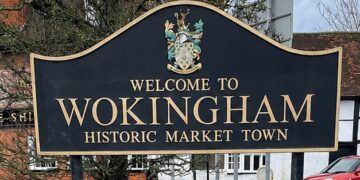





Wokingham is a town that beautifully balances its historic market-town charm with modern, forward-thinking development.
Recent years have seen massive transformations — from the multi-million-pound regeneration of Peach Place and Elms Field to the changing face of our high streets.
But as the old adage goes, progress often requires saying goodbye to the past.
While change brings fantastic new amenities like the Everyman Cinema and buzzing new plazas, it also leaves a trail of nostalgia.
Here are eight things that have officially disappeared from Wokingham, leaving behind nothing but fond memories and local history.
1. Skateworld on Finchampstead Road
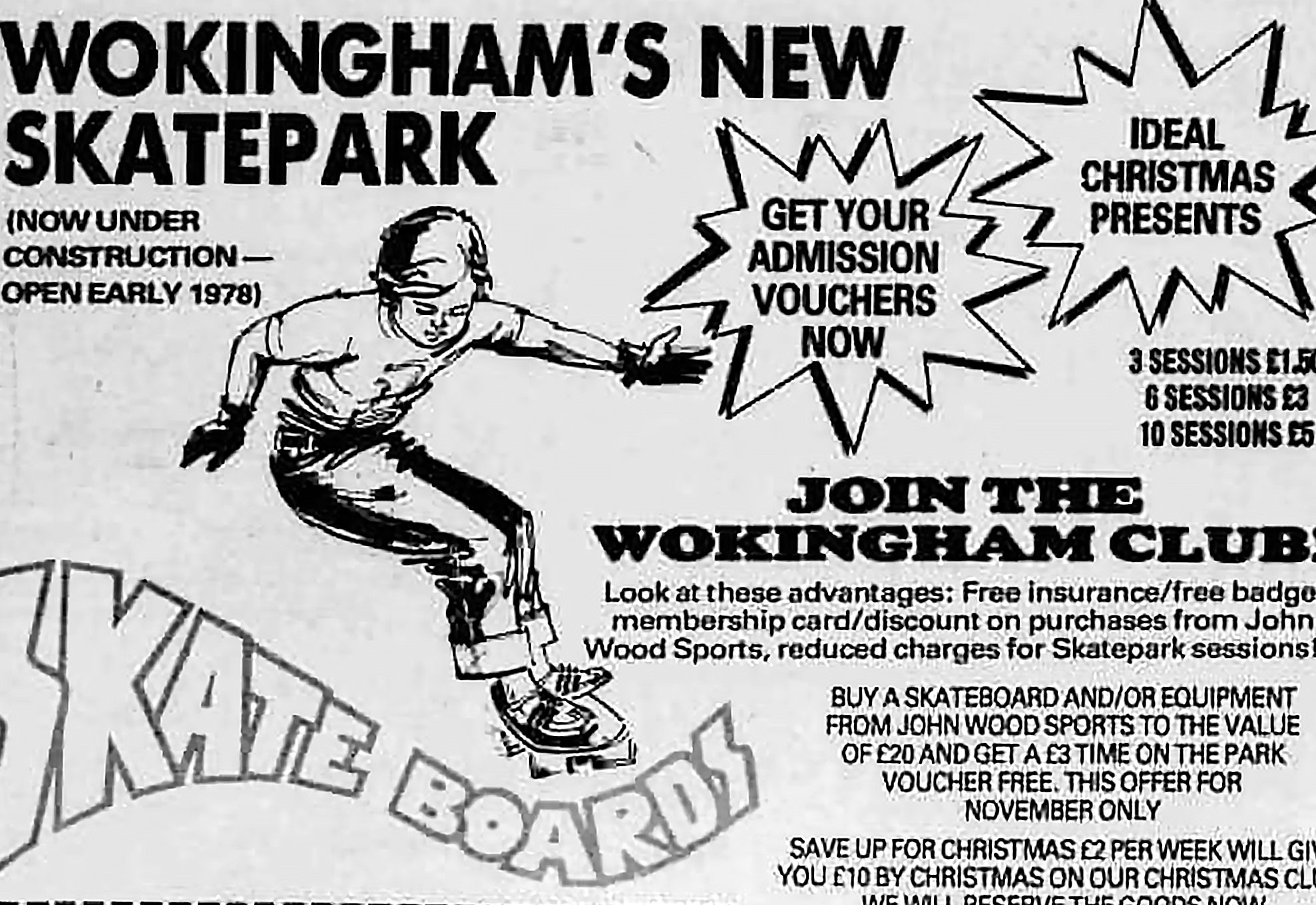
Long before modern metal ramps popped up at St Crispin’s, Wokingham was home to a legendary piece of subculture history: Skateworld (later renamed Skateways).
Opened in the spring of 1978 during the height of the UK’s first major skateboarding craze, this massive outdoor concrete park was built right on Finchampstead Road at the rear of what was then the home of the local football club.
It was a sprawling, radical playground featuring a 175-foot half-pipe, a “Clover Leaf” run that dropped into three shallow bowls, and a winding “Snake Run” that emptied into a deep concrete pool.
For a few glorious years, teenagers from all over the borough paid their entry fee, strapped on their heavy safety gear, and carved up the concrete.
When the craze cooled down, the park was filled in and built over, leaving today’s skaters with only vintage photos and retro badges to prove it ever existed.
2. Martin’s Pool
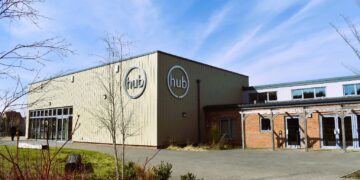
Long before Wokingham residents headed to the modern indoor lanes of the Carnival Hub, long summer days were spent at Martin’s Pool.
Located off Milton Road, this open-air, unheated swimming pool opened in the 1930s and became the absolute heart of the community every June through August.
Sadly, maintaining the open-air pool became increasingly difficult, and it closed its doors for good in 1992.
The site was later redeveloped into housing (Martin’s Drive), but for generations of Wokingham folk, it remains the ultimate symbol of lost summer youth.
3. The Wokingham station signal box
For generations of commuters, the traditional brick-and-timber Wokingham signal box adjacent to the level crossing was a reassuring, permanent fixture of the daily slog.
Originally authorised under the Reading, Guildford and Reigate Railway Act of 1846, the railway line has a deep history. However, following the completion of Network Rail’s extensive Feltham resignalling programme, the box became entirely redundant.
Demolition plans marked the definitive end of an era for Wokingham’s trackside heritage, changing the view from the platform forever.
4. The Crimpy Crisp factory
Long before Walkers and major supermarkets dominated the snack aisles, Wokingham had its very own hometown crisp.
The Crimpy Crisp factory, once located down the road towards Reading, was a major local employer and a source of immense town pride.
Locals of a certain vintage still fondly recall the distinct, savoury aroma of frying potatoes that would drift across the town on production days.
Today, the factory is completely flattened—replaced by a large Sainsbury’s supermarket.
5. The old mini-roundabout by the level crossing
If you drove through Wokingham prior to the mid-2010s, you likely bear the psychological scars of the infamous “mini-roundabout by the level crossing” system.
It was a notoriously chaotic bottleneck where Barkham Road, Wellington Road, and Station Road converged right on top of the train tracks.
The introduction of the Station Link Road completely reorganised the layout, sweeping away the confusing mini-roundabout in favour of a smoother, safer flow of modern traffic.
6. The original Elms Field play area
Before the sweeping regeneration of Elms Field brought us a pristine, state-of-the-art wooden play fort, a cinema, and a hotel, the park looked entirely different.
Many Wokingham parents and grown-up children will remember the “old” Elms Field.
It featured slightly tired, squeaky metal swings, a classic roundabout that went just a bit too fast, and a sprawling expanse of grass that often turned into a giant puddle after a standard Berkshire downpour, as well as tennis courts and a pitch-and-putt golf course.
7. The Broad Street Half Moon alehouse
Wokingham’s historic pubs are legendary, but the town has lost dozens over the centuries. One of the most significant architectural disappearances was The Half Moon, an 18th-century alehouse that stood on Broad Street.
Serving townspeople for generations, it was eventually demolished to make way for modern infrastructure.
If you want to stand exactly where locals used to clink ale tankards 250 years ago, you’ll have to head to the Royal Mail Sorting Office, which occupies the historic site today.
8. California in England amusement park and zoo
While the gorgeous nature trails, Longmoor Lake, and modern paddling pool of California Country Park are still enjoyed by thousands today, the site’s original, wild incarnation has completely vanished.
Established in 1931 by Alfred Cartlidge, the site was originally “California in England” — a massive, bustling amusement park and zoo designed to lure holidaymakers from London.
In its mid-century heyday, it boasted a miniature railway, a circus that visited every summer, and a grand Art Deco main building featuring a legendary sprung glass-floored ballroom built right over the water.
It later transformed into a classic 1960s holiday camp. Sadly, the amusement business eventually faded, and a devastating fire in 1976 destroyed the famous ballroom structure.
Today, nature has reclaimed the old tracks and enclosures, leaving a peaceful country park where a vibrant theme park once stood.
What do you miss most about old Wokingham? Is there a lost shop, pub, or landmark that holds a special place in your heart? Let us know.