

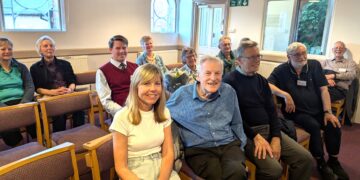





















MEMBERS of a local history society gave village festival goers an opportunity to delve into Wargrave’s past.
Wargrave Local History Society aligns its activities with Wargrave Village Festival in alternate years.
This year the society’s displays at the village festival fete included information about the history of the group itself, with aerial photographs of the village at different times over the past century showing how the village had developed.
Another section covered bus and train transport that had served the village.
“One of those pictures created a lot of interest,” said Wargrave Local History Society member Peter Delaney.
“Quite a few people thought that it had been taken at Twyford station, not realising that for many years the railway station at Wargrave had a substantial brick building on the platform, where tickets could be purchased, and waiting passengers kept warm in the winter months with a coal fire in the waiting room.”
Built in 1900 to the standard GWR design, the railway station was demolished in 1988, replaced by a simple glazed metal shelter.
Visitors also took time to try and identify 20 photographs of Where is it in Wargrave?
“Several people thought one of these was at Crazies Hill, although actually it was only about 100 yards from where they were stood,” said Peter.
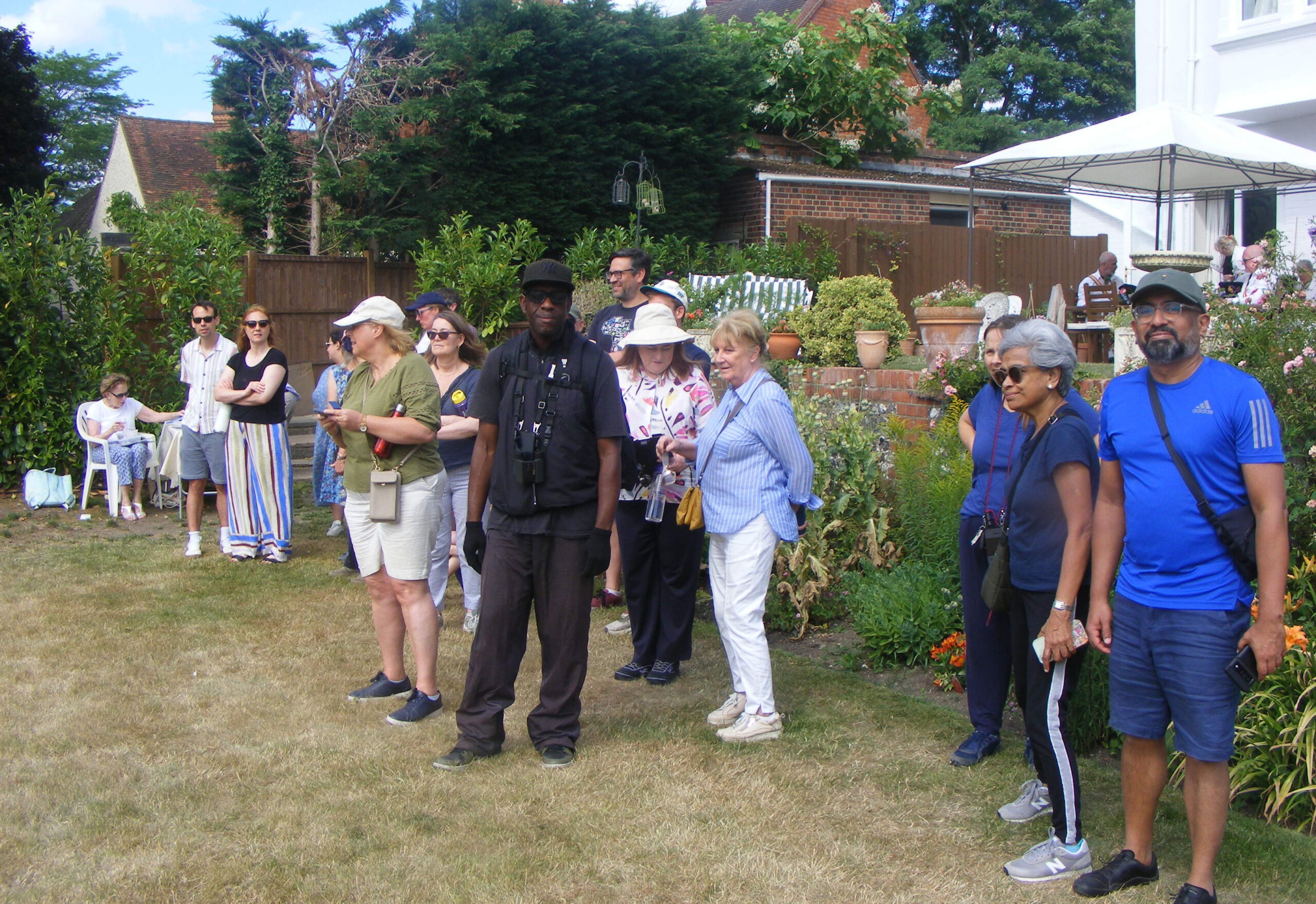
The society’s Historic Village Walk was popular, with all tickets sold well before the event.
Tour guides pointed out places of interest and recounted stories of historic village residents and incidents as they took visitors from the Mill Green memorial, through the churchyard, and along Church Street and the High Street to the foot of Wargrave Hill.
A unique feature of this year’s Historic Village Walk was the chance to visit the grounds of Wargrave Hall, by kind invitation of Terry Grourk.
Peter explained that Wargrave Hall has a place not only in village history, but in national history too.
“Lord Barrymore – Wargrave Theatre owner in the 1790s – was tutored there before attending Eton College,” he said.
“And Cabinet members met there before and during World War 1, and in the post war era, for discussions leading to the establishment of the Irish Free State.
“The house then belonged to Edward Goulding, who became Lord Wargrave in recognition of his involvement in these events.
“Terry has produced a booklet; The Hidden History of Wargrave Hall, which describes the ownership and events of the property from its building through to the present.”
For more information about the society, visit: wargravehistory.org.uk