



































Wokingham has been revealed as the second worst-affected area in Berkshire for Japanese knotweed, with 87 verified sightings of the invasive plant threatening local property values.
According to 2026 data released by invasive plant specialist Environet, Wokingham sits just behind Reading in the county rankings. The data is drawn from Exposed: The Japanese Knotweed Heatmap, a live tracker based on public sources, company enquiries, and verified sightings submitted by the public.
Across Berkshire, there are currently 547 verified sightings – equivalent to 1.12 incidents per square mile – making it the 19th worst-affected county in England.
If left unmanaged, knotweed can cause significant damage to buildings, hinder property sales, and lead to legal disputes if it spreads across property boundaries.
Research conducted by Environet and Censuswide in January 2026 indicates that 7% of UK homes (more than 1.58 million properties) are impacted by the plant. For those affected, property values are typically reduced by around 5% – equivalent to £13,500 per home – representing a significant hit to housing wealth.
Introduced to Britain as an ornamental garden plant during the Victorian era, Japanese knotweed has spread rapidly via the movement of contaminated waterways, soil, and over 150 years of industrial and construction activity.
Because all the plants in the UK are female, the weed does not reproduce by seed. Instead, its destructive root system can extend up to 7 metres laterally beneath the ground. Once established, even tiny fragments of its rhizome can regenerate into entirely new plants.
Today, it ranks as the UK’s second most costly invasive non-native species, sitting just behind the fungus that causes ash dieback. According to CABI, knotweed is responsible for an estimated £246.5 million in annual economic costs.
Environet director Emily Grant warned that the plant is now firmly established across the country, making it essential for homeowners to know what to look for.
“My advice to anyone living, or buying a home, in a Japanese knotweed hotspot is to check your garden regularly during the growing season,” Grant said.
“The earlier it’s spotted, the easier and cheaper it is to deal with. Acting quickly with professional advice will prevent it from spreading further and help protect both your property and its value.”
How to spot Japanese knotweed during summer:
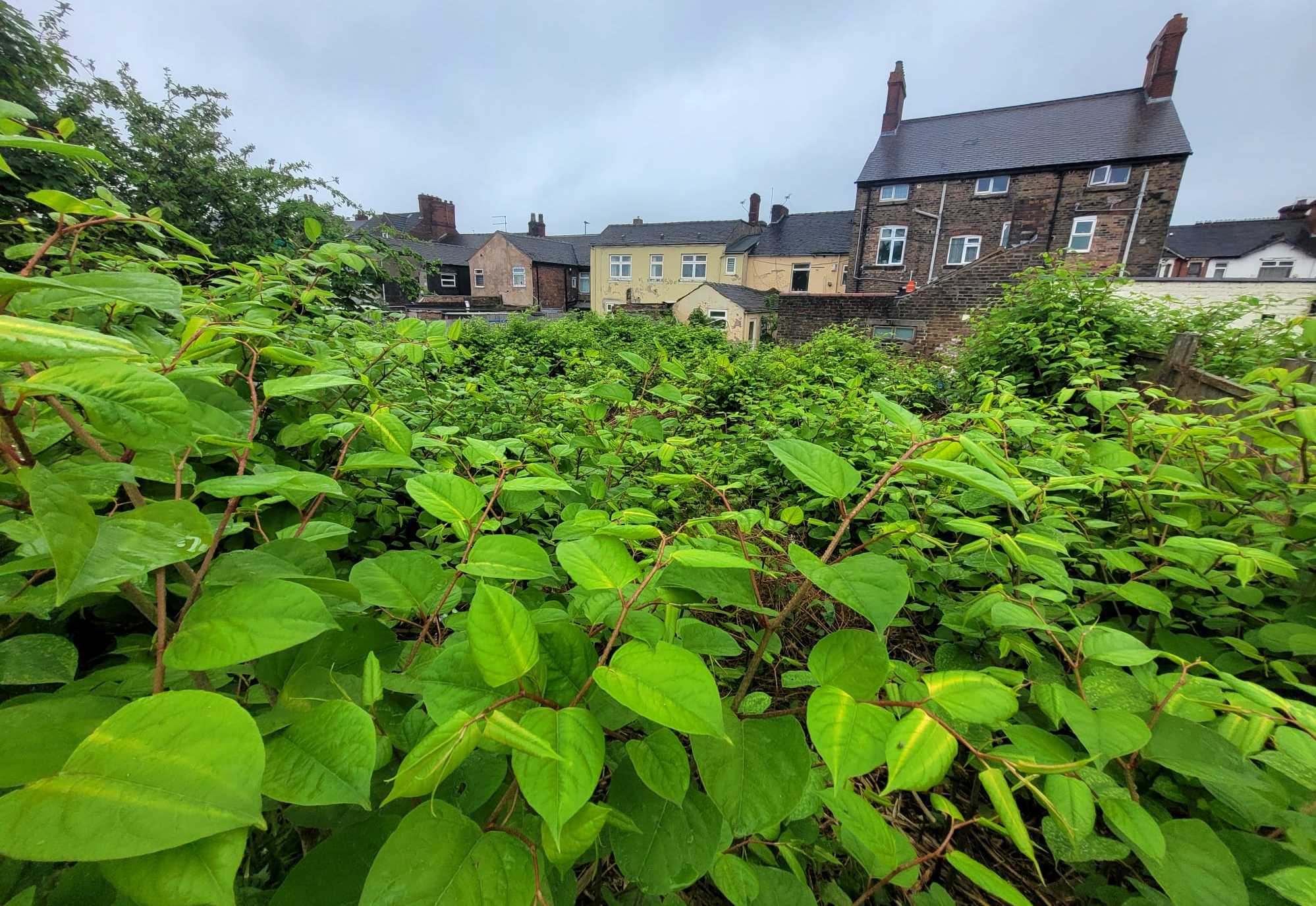
Height: Tall, upright canes that can reach 2 to 3 metres high.
Base: Dense clusters of stems emerge from a central crown in the ground.
Leaves: Large, green, shield-shaped leaves with a pointed tip that grow alternately (in a zig-zag pattern) up the stem.
Flowers: By late summer, cone-shaped tassels of small creamy-white flowers emerge on the upper canopy.
Residents who suspect they may have knotweed on or near their property can email a photo to Environet at expert@environetuk.com for free identification. If confirmed, a survey will determine the extent of the infestation, the risk of encroachment, and the most effective treatment plan.